

The world's new operating system.
SuperFile’s Earth-to-Space Digital Infrastructure.
Money that reaches people no bank, no border and no power grid can reach — carried by satellites, settled on a blockchain in orbit, and signed with SuperFile.
- 13 Dec 2020
- Signed in orbit
- 1.3B
- Adults unbanked
- 14×
- Orbits per day
- 365 pp
- Published application
End to end
Follow one payment, ground to orbit and back.
Seven steps, each with who provides it, what it costs and how long it takes. Play it through, or step to any stage — value goes up, comes down where the banks stopped, and the proof comes back to whoever paid.
Transaction walkthrough · step 1 of 7
Swipe left or right to move between steps · tap the diagram for the next one
Ground tier
1 · SuperFile handle
Donor or sender signs from the SpaceFile App
A payment, aid grant or remittance is authorised against a SuperFile handle. The instruction is signed on the device, so nothing sensitive leaves the handset in the clear.
Signed on device · ~120 ms
Why this step matters: SuperFile owns the identity layer, so the payer is provable before a single satellite is involved.
- Provided by
- SpaceFile App · SuperFile identity
- Indicative cost
- No marginal cost per signature
- Time in this step
- ~120 ms
SpaceFile — SuperFile’s financial network, moved into orbit.
SuperFile already does one thing better than anyone: it binds a document to an owner so that ownership can be proved anywhere, and revoked in one click. SpaceFile is that same layer applied to money. Every account, aid transfer and receipt on the SovereignSky constellation is issued as a signed SuperFile — notarised on a ledger whose nodes are in space, and therefore outside the reach of any single grid, registrar or border.
Identity you own
A SuperFile handle stands in for the passport, bill or bank record a person doesn’t have.
Money as a signed file
A transfer isn’t a ledger line — it’s an artefact naming who sent it and who holds it.
Revocable in one click
A grant issued in error can be withdrawn instantly and verifiably.
Notarised from orbit
Proof that doesn’t depend on a data centre, registrar or jurisdiction staying cooperative.
Visual overview
Project visualization
A quick look at how SpaceFile drops value from orbit to a wallet on the ground.
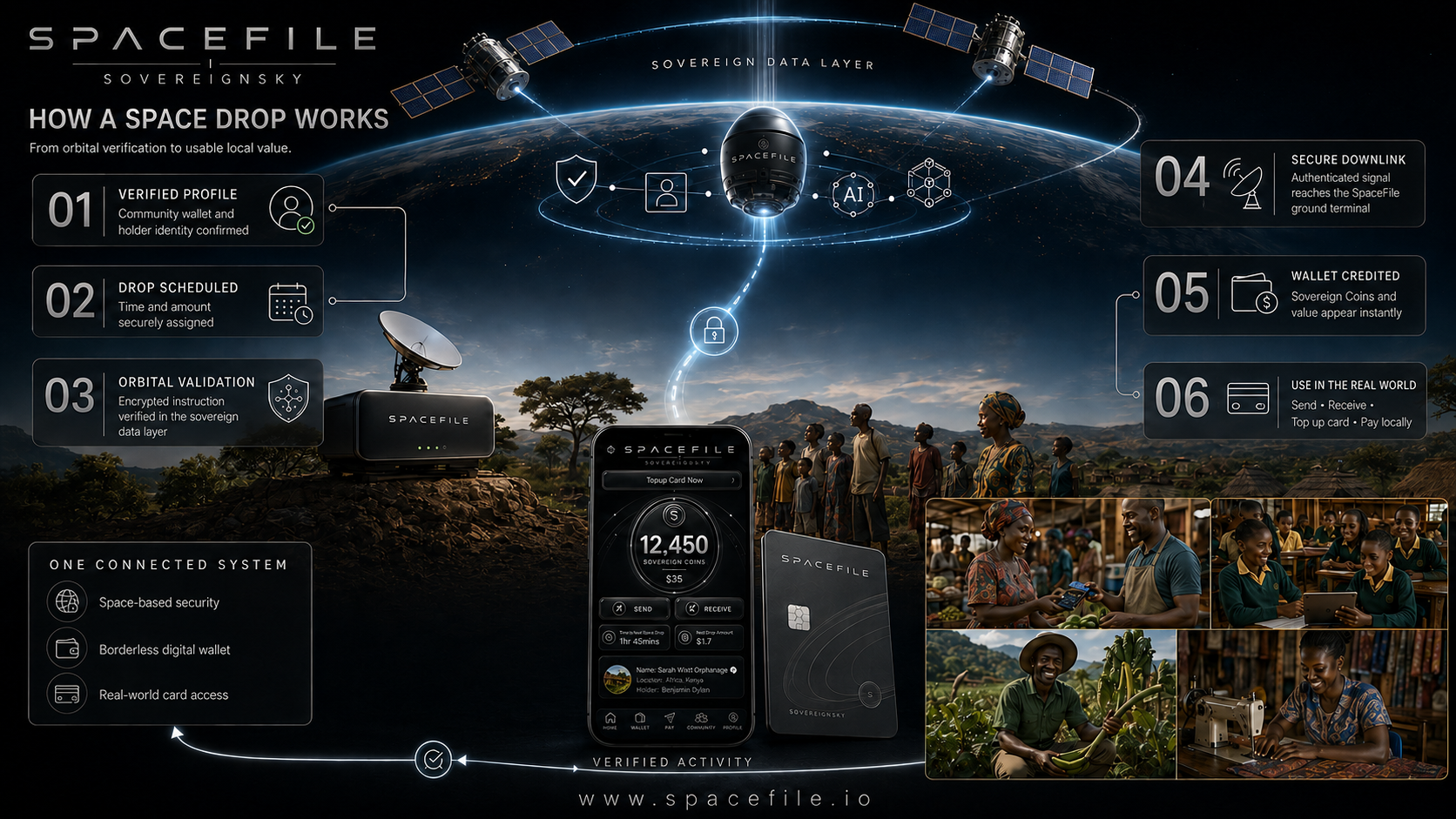
How a Space Drop works — from orbital verification to local value.
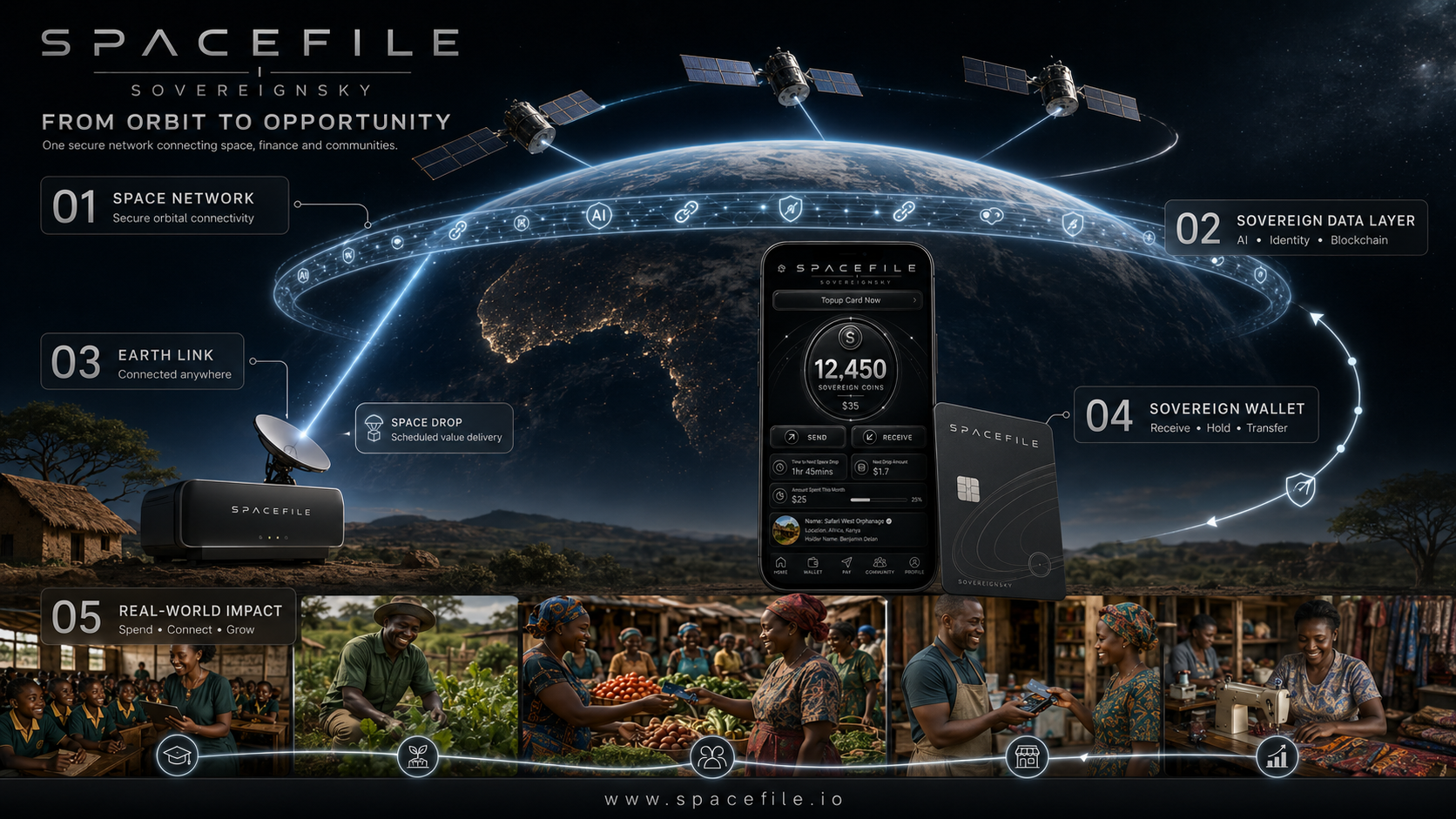
From orbit to opportunity — one secure network connecting space, finance and communities.
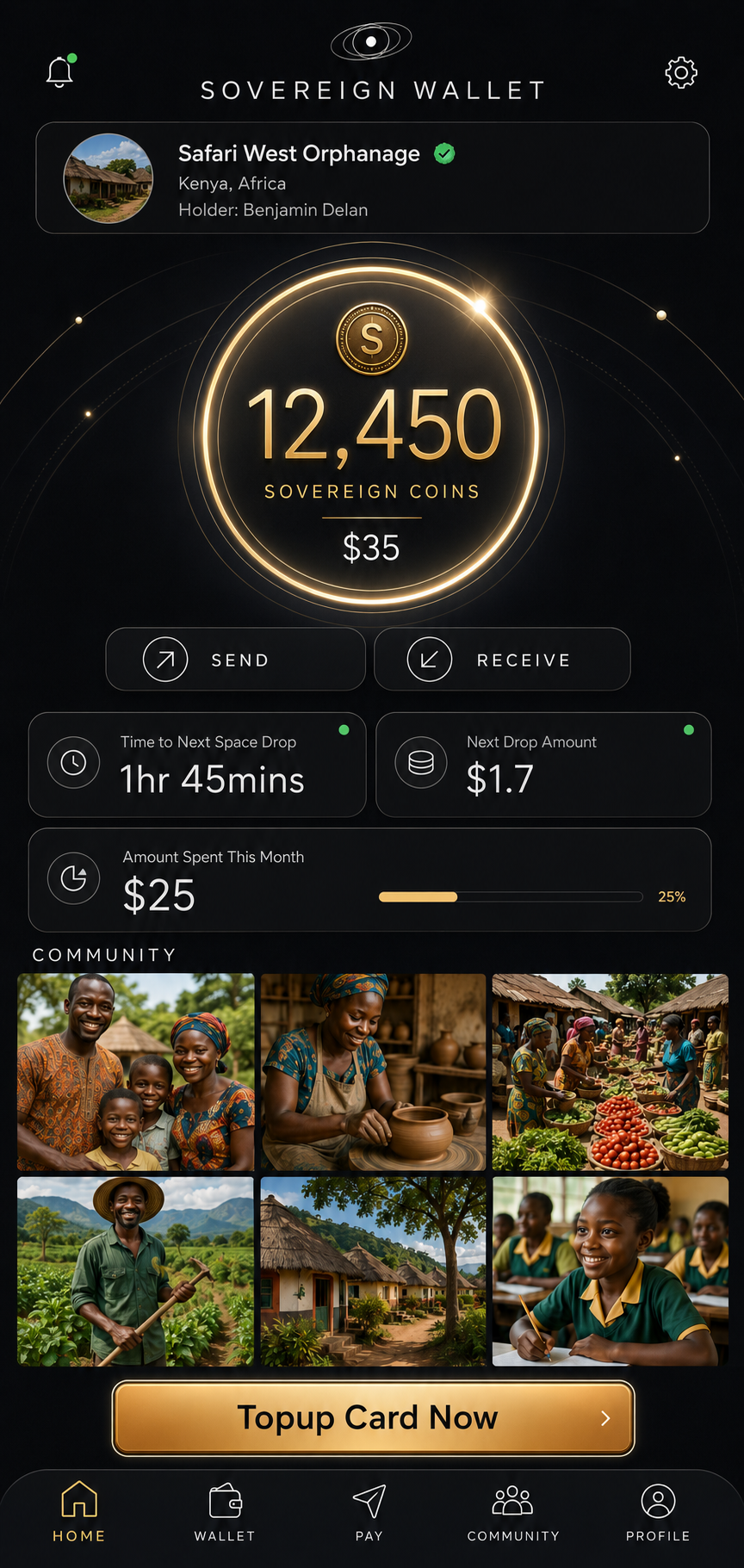
Sovereign Wallet app concept — send, receive and top up anywhere.
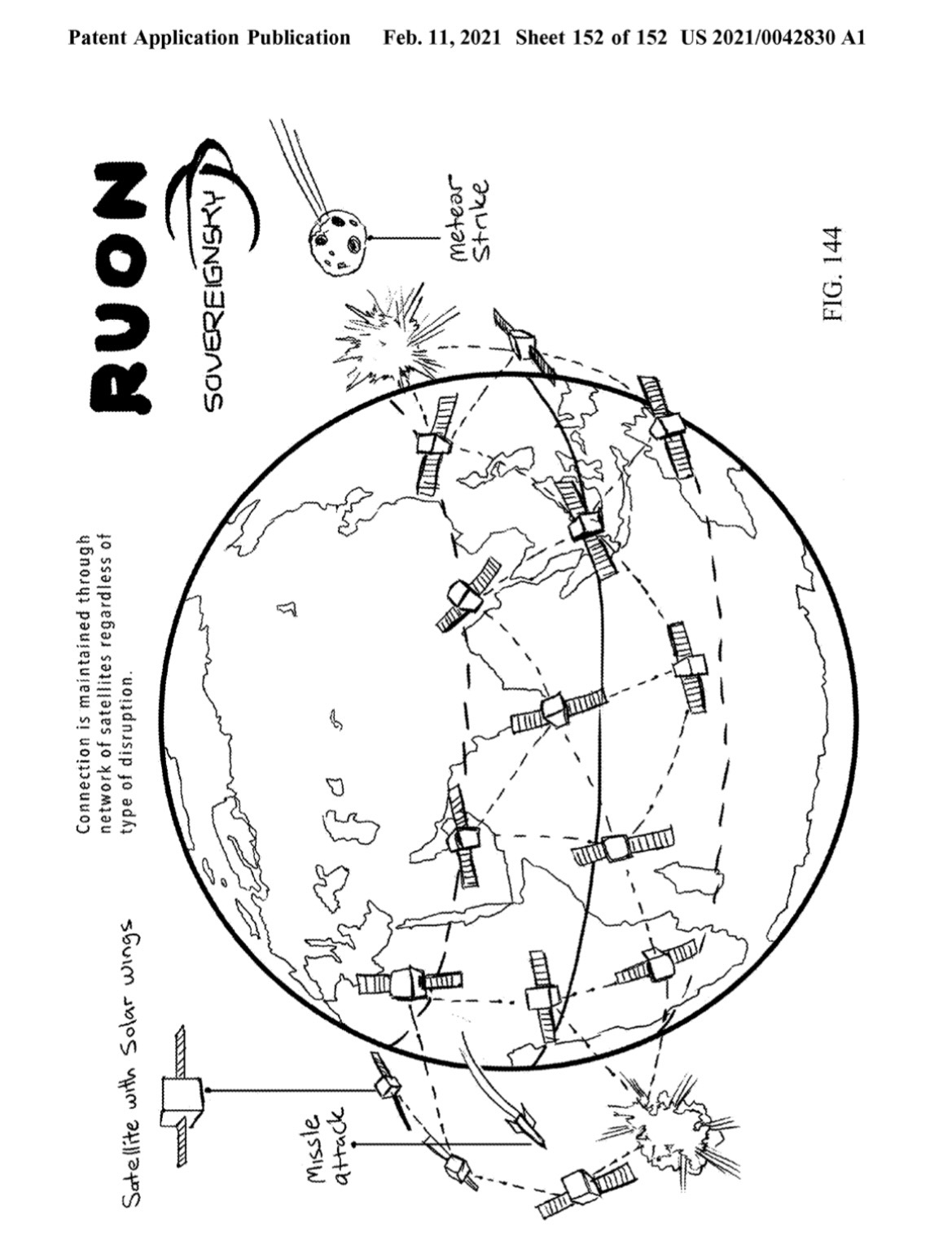
Why it has to be in orbit
A resilient banking system in orbit is the most important financial infrastructure we can build.
Every financial system on Earth shares one weakness: it sits on the ground. Data centres, cables, grids, registrars and branch networks all depend on a functioning planet underneath them. A ledger whose nodes orbit above that layer keeps clearing when the ground layer cannot — and it is the only banking rail that still works off-planet.
The published application describes a mesh where any node can be lost — to debris, a solar event or a ground outage — and consensus continues across the surviving satellites. No single data centre, grid or outage can switch it off.
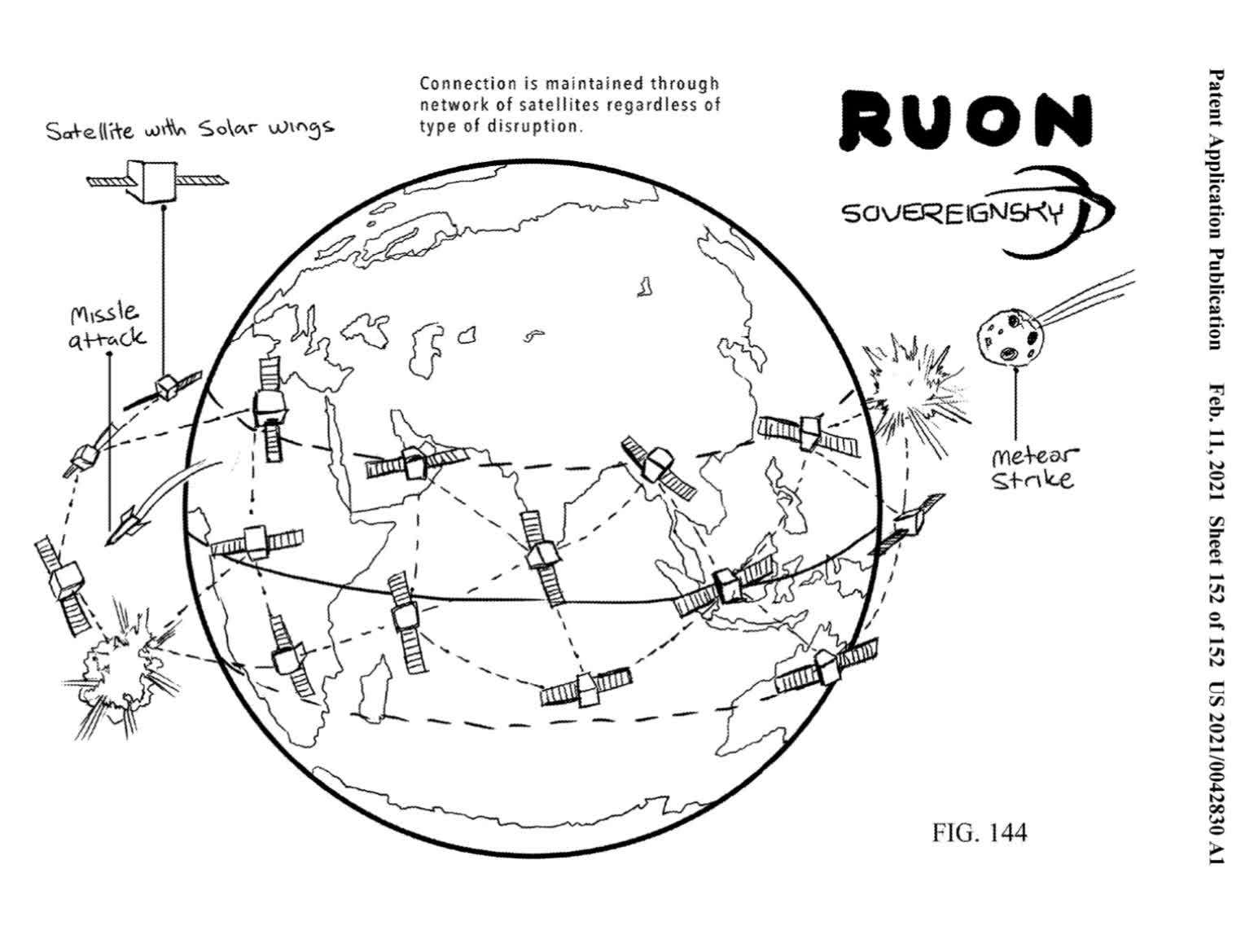
Continuity through catastrophe
A Carrington-class solar flare, a nuclear exchange, a geomagnetic polar reversal, a cable cut or a regional grid collapse can take terrestrial banking offline for weeks. Orbital nodes hold the record of who owns what, and can re-seed the ground layer once power returns — a financial black box for the planet.
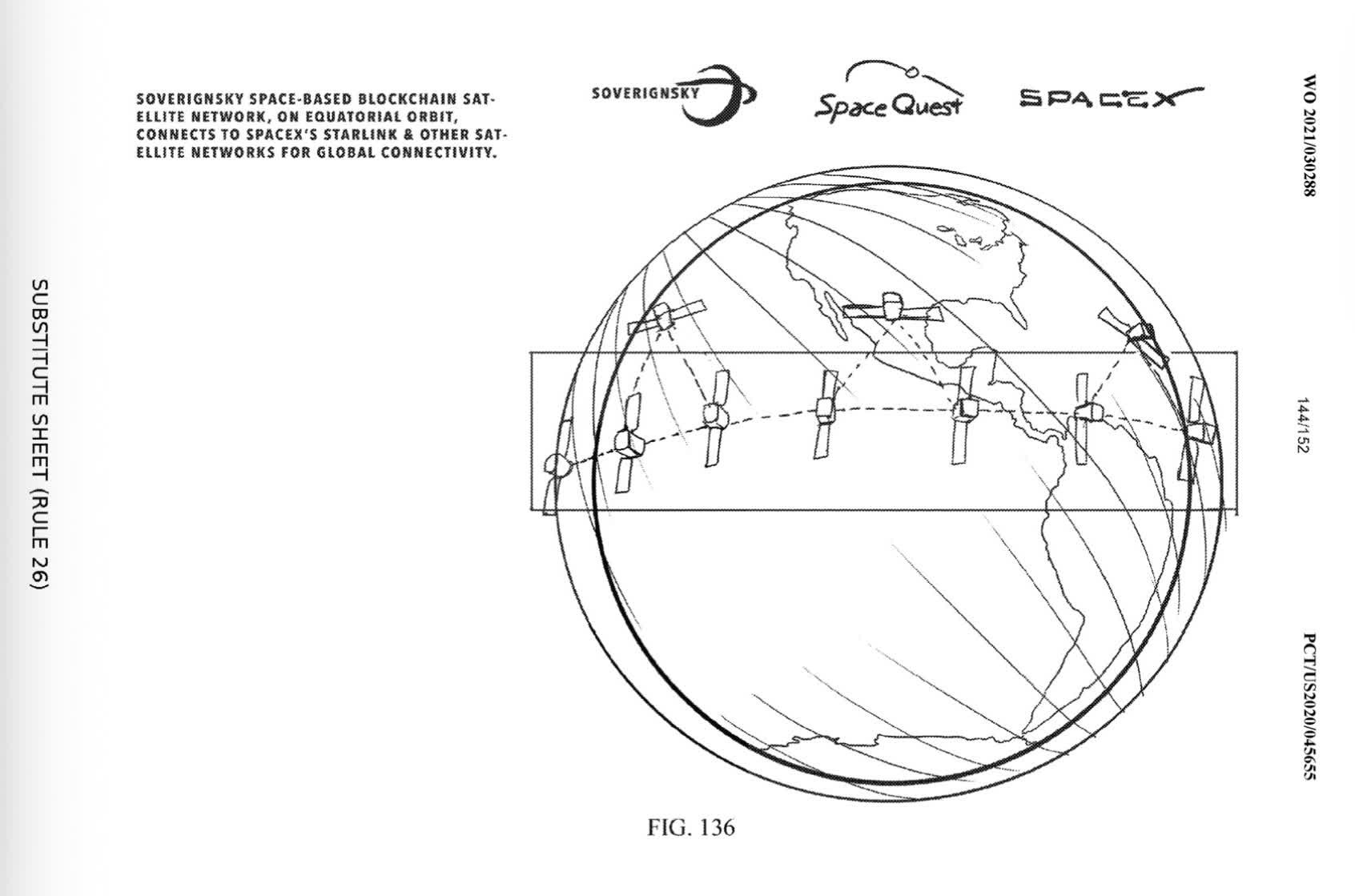
Beaming money to anywhere on Earth
Value delivered direct to device needs no branch, no tower and no mains power. Emergency cash can be sent to named individuals within hours of an earthquake, flood or conflict — after Bahrain-style regional disruption or a cyclone landfall — instead of waiting on convoys, bank reopening and paper vouchers.
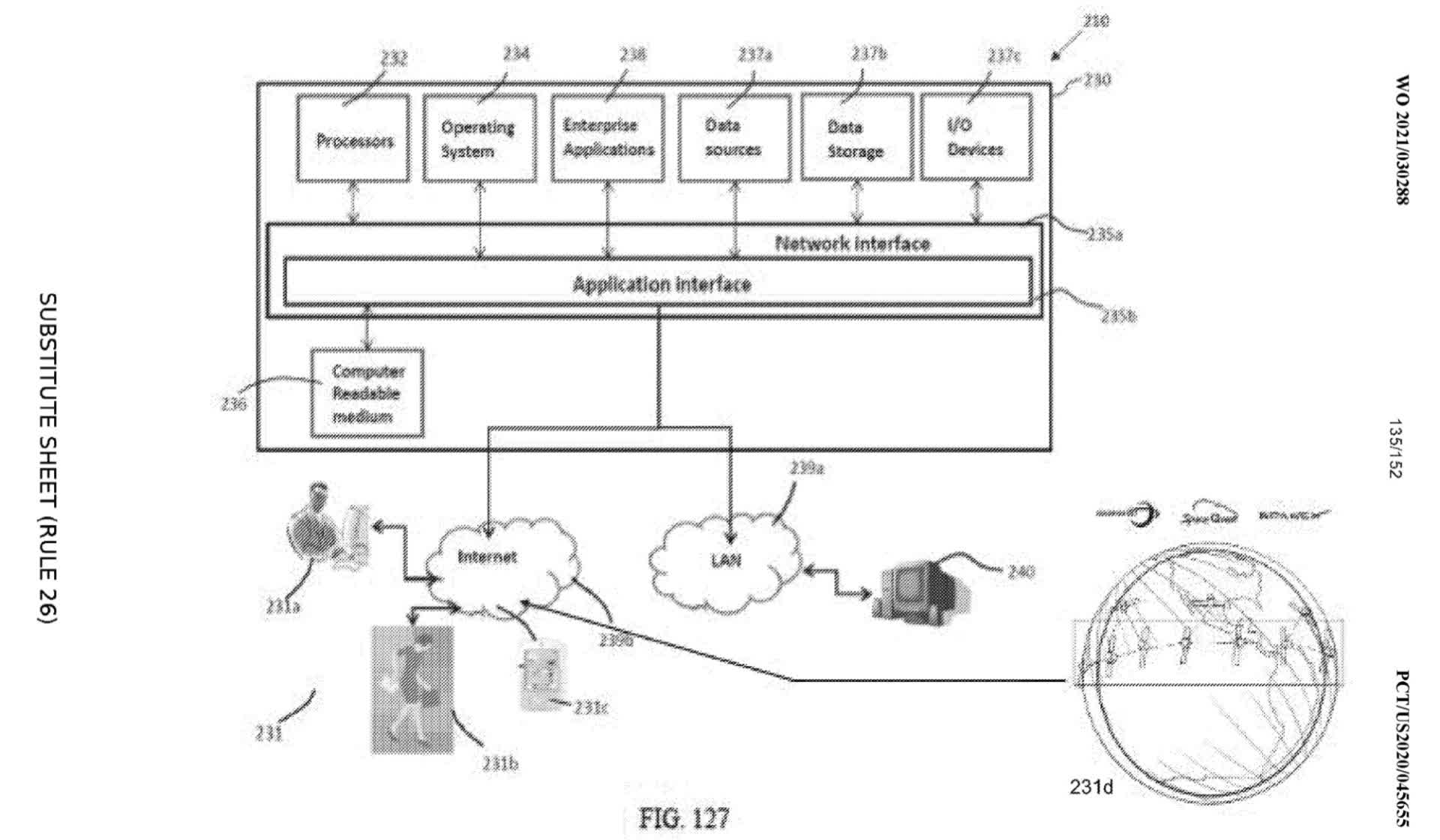
The rail for space tourism and off-planet work
Crews, tourists and station operators need to hold balances, pay for services and settle contracts beyond terrestrial jurisdiction and beyond radio round-trips to a bank. A ledger already in orbit is the natural clearing layer for suborbital flights, orbital hotels and commercial stations.
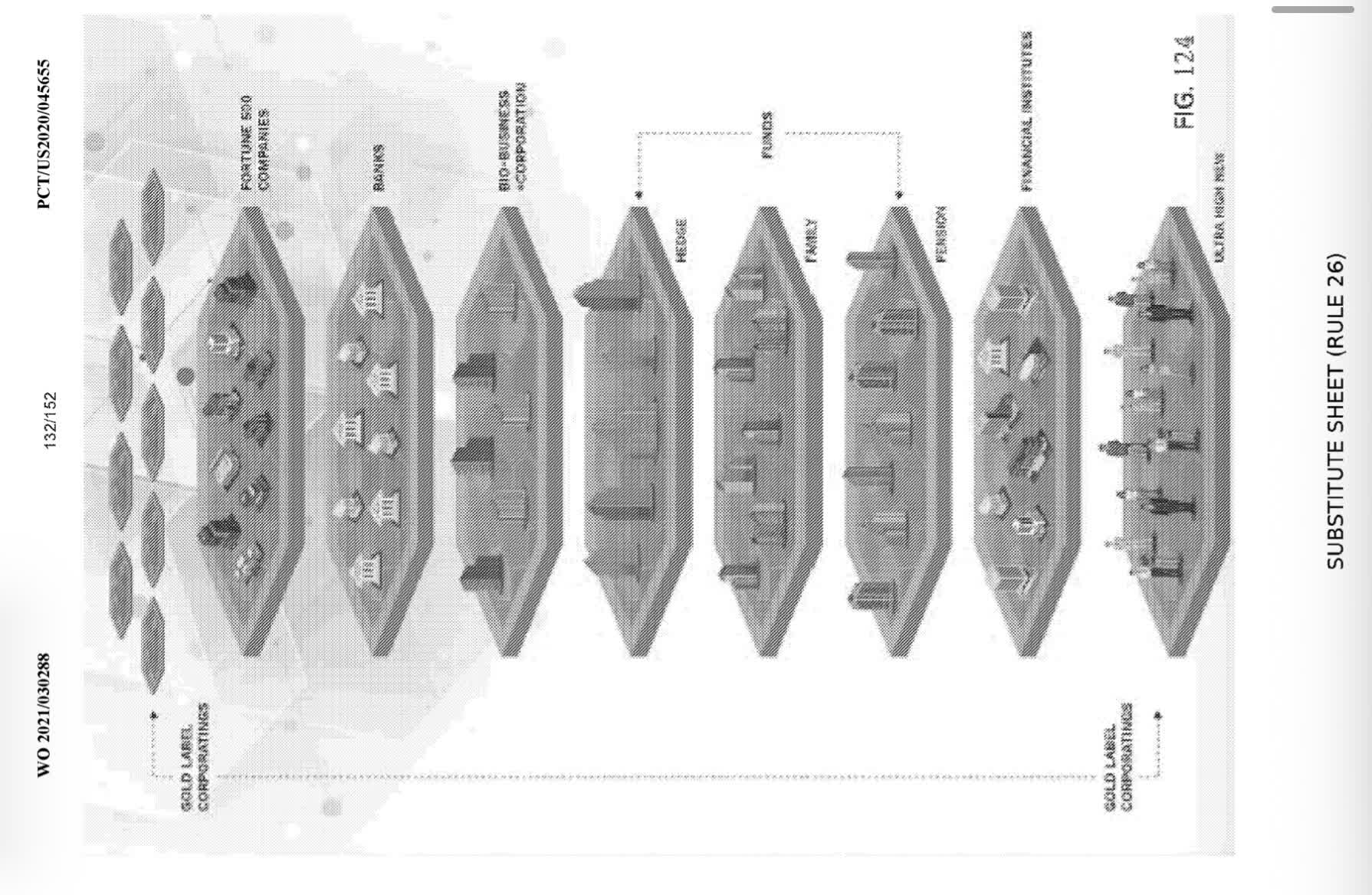
Interplanetary exploration needs interplanetary money
Lunar and Martian operations cannot depend on a settlement system that lives on one planet. Signed, offline-capable transactions that reconcile on the next pass are the only model that tolerates minutes of light delay — and they let institutions, funds and governments plug the same rail into cislunar commerce.

The ecosystem
Six products. One Earth-to-Space platform.
SuperFile is no longer a satellite project — it is an Earth-to-Space Digital Infrastructure company combining AI, secure cloud, digital identity, banking, financial services, community connectivity, orbital computing, satellite infrastructure and blockchain security in a single institutional stack.
SuperFile Cloud
The secure digital vault for every individual and organisation.
SuperFile Identity
Signed, portable, revocable identity a person owns outright.
SuperFile AI
Assistants for citizens, governments, enterprises and humanitarian teams.
SuperFile Pay
Wallets, banking, remittances, aid distribution and merchant settlement.
SuperFile Connect
Solar Community Connectivity Boxes with local AI, offline capable.
SuperFile Space
Orbital computing and satellite infrastructure — formerly SovereignSky.
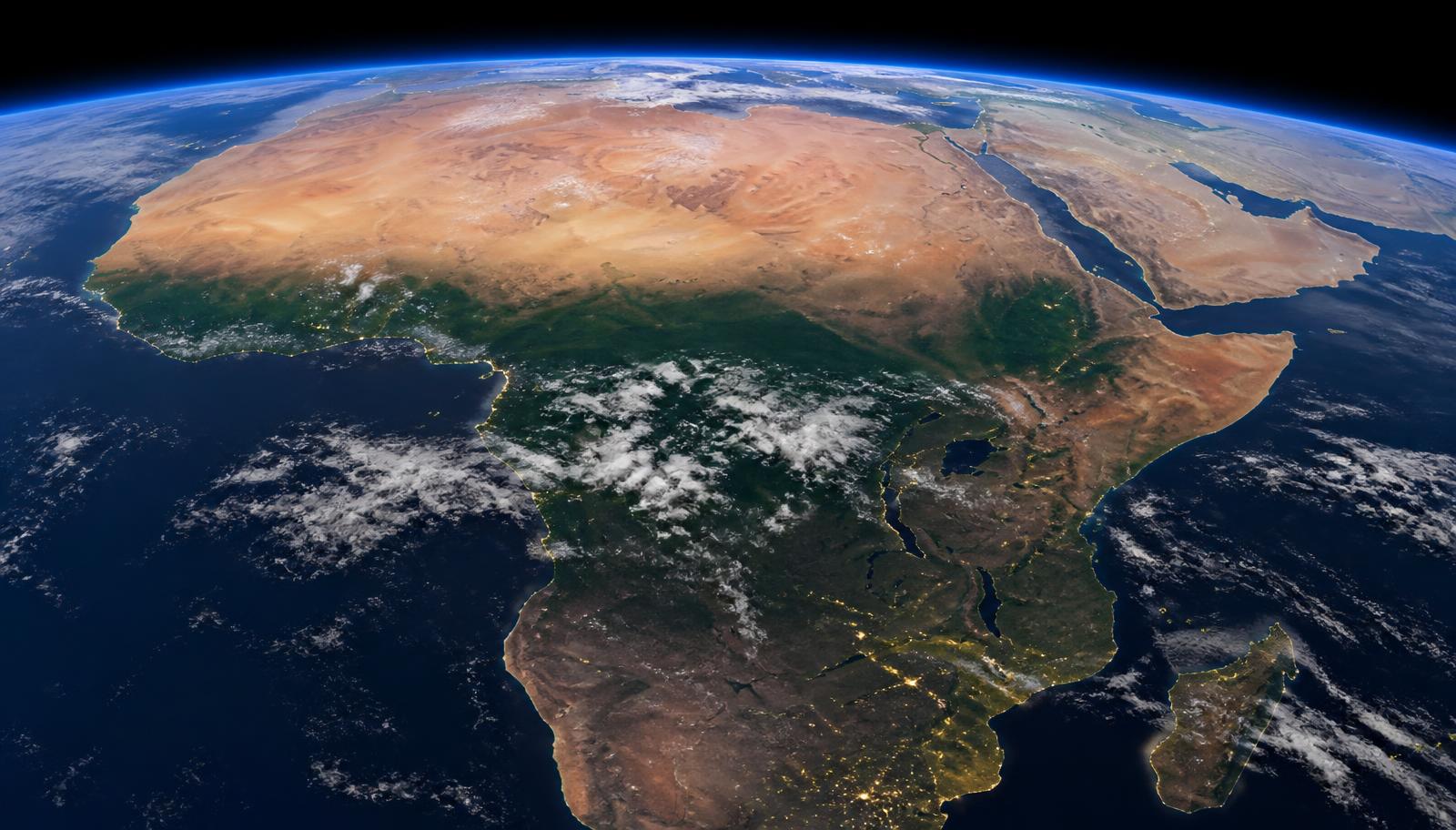
Mission control
A ten-year project to move value where the world's infrastructure stops.
Half the planet's poorest people live outside the reach of a working financial system. SovereignSky's answer is to stop trying to extend the ground network and instead place the network above it.
Proven in orbit
One of the first blockchain transactions ever signed in space.
On 13 December 2020, SovereignSky and SpaceQuest confirmed a blockchain transaction signed aboard AprizeSat-5, a satellite launched on a SpaceX Falcon 9. The signature generated in orbit matched the checksum obtained on the ground, byte for byte.
“Signature generated, verifying… success: the md5sum matches what we obtained on the ground. So we have now signed one of the first ever blockchain transactions in orbit.”Dino Lorenzini, CEO, SpaceQuest
1.3B
Adults with no bank account
World Bank Global Findex 2025. Billions more are underbanked — no credit, no savings, no way to receive money at distance.
$130B
Per year to end extreme poverty
The figure cited in SovereignSky's whitepaper, against roughly $800B given to charity globally each year.
97.5%
Of a donation to the recipient
SovereignAid is designed to route value directly to the person in need rather than through layers of intermediaries.
Orbit
Where the ledger lives
Nodes above national jurisdiction, beyond local outage, censorship or seizure.
Constellation planned
The problem
Being poor is expensive. Being unreachable is worse.
An aid dollar sent to a remote village can lose a third of its value to fees, currency spread and intermediaries before it arrives — if it arrives. Where there is no bank branch, no reliable grid and no mobile coverage, it usually doesn't.
- No identity document means no account, and no account means no way to receive money at distance.
- Cash aid depends on physical logistics that fail exactly when crisis makes them essential.
- Donors cannot see where their money went, so trust — and giving — stays lower than it should.
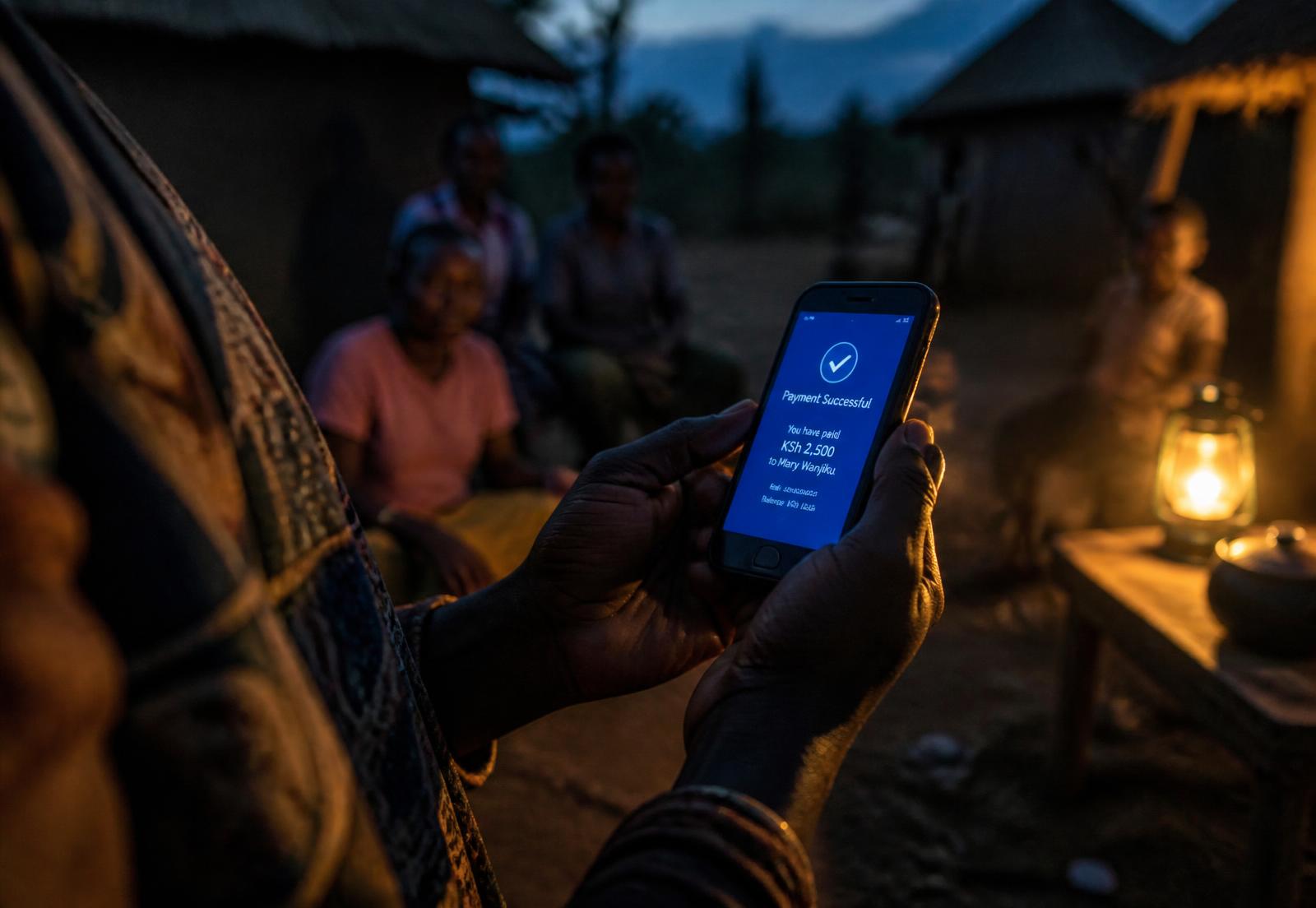
How it works
Six steps, from space infrastructure to a proof of spend.
The end-to-end flow: what the constellation does, how a person gets an account, how they spend it where there is no signal, and how the money is proved after it lands.
01
Infrastructure in orbit
Ledger nodes and AI compute ride satellites in low Earth orbit — above any grid, border or outage that could switch a ground network off.
02
An account from a satellite pass
A handset connects direct to device, an identity is proved on the phone without paperwork, and an account number, wallet and smart card are issued.
03
Value is sent to a name
A donor, agency or family member sends to a verified SuperFile handle — a person, orphanage or clinic they chose — not to an intermediary.
04
Settled in orbit, delivered on the ground
Orbital nodes settle the transfer and a Solar Connectivity Box carries it the last mile to a wallet on a simple handset.
05
Spent, even with no signal
A signed offline envelope lets the smart card buy food, medicine and school supplies before the network has seen the payment at all.
06
Proved back to the donor
Receipts settle on the next pass and are notarised with SuperFile, alongside photos posted by the recipient — an audit trail anyone can follow.
Related detail