
Technology
An operating system for money, running in space.
Terrestrial finance inherits every weakness of the ground it sits on: borders, grids, cables and courts. Move the ledger into orbit and those constraints stop applying to the people who suffer most from them.

Layer one
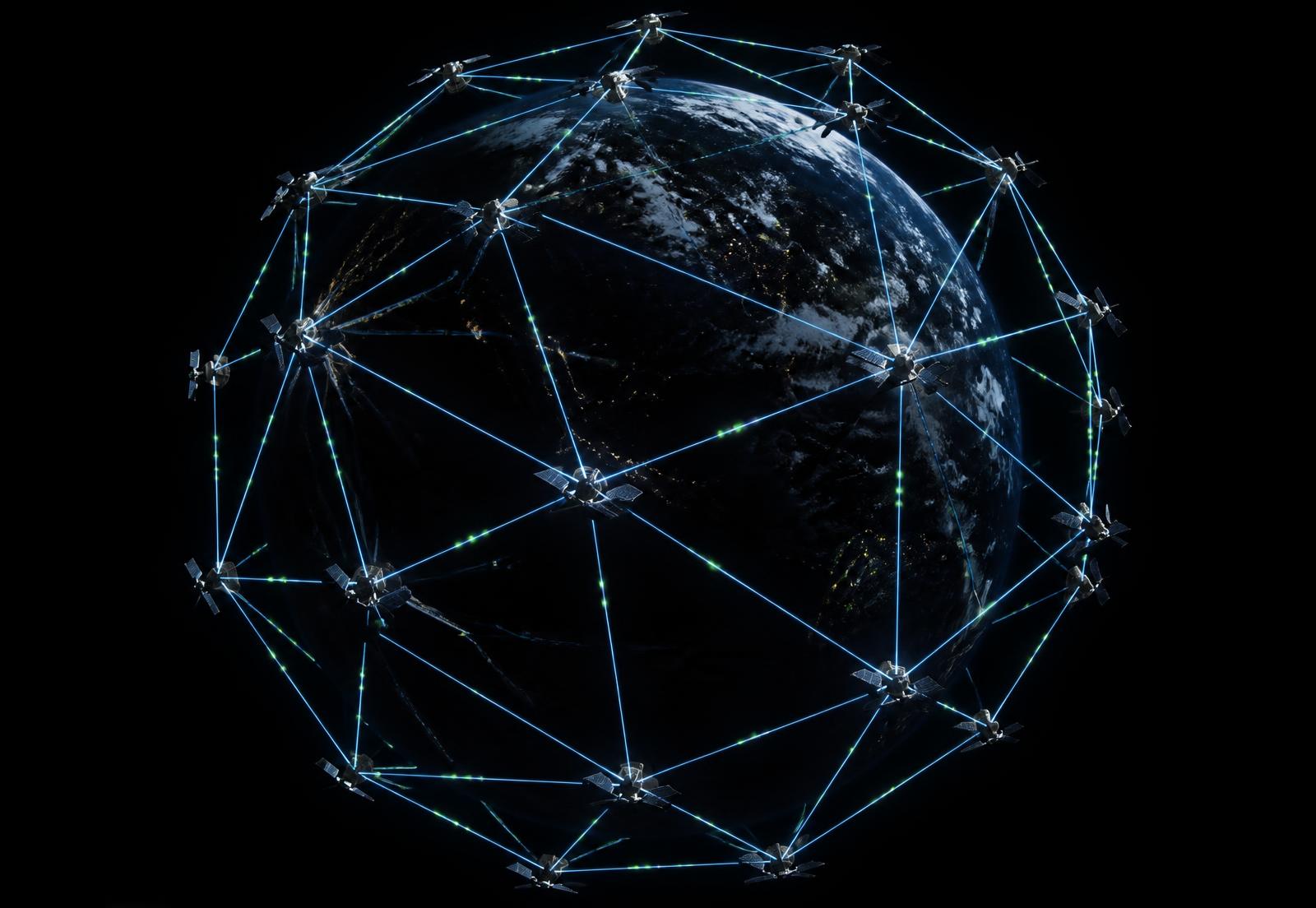
Ledger nodes in low Earth orbit.
Consensus participants distributed across orbital planes, each passing over any point on Earth several times a day. The 2020 orbital signature on AprizeSat-5 proved the primitive works; the constellation scales it.
Pole-to-pole coverage
14 orbits a day means every location on Earth is in view at least twice each morning and night.
No jurisdictional home
Processing above national territory removes the single points of legal and physical control.
Low emissions
Solar-powered nodes and a low-energy consensus design, rather than industrial proof-of-work.
Rideshare economics
Modern small-sat launch on Falcon 9-class vehicles makes an eight-satellite build achievable.

Coverage
Where the first footprints fall.
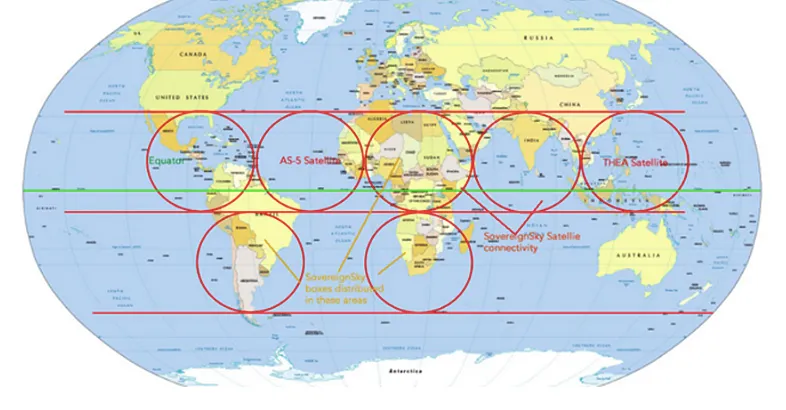
The original mission plan: AS-5 and THEA passes bracketing the equatorial belt, with SovereignSky ground boxes distributed through Central and South America, sub-Saharan Africa and South Asia — the regions where the unbanked are concentrated.

The fleet
The hardware this network rides on.
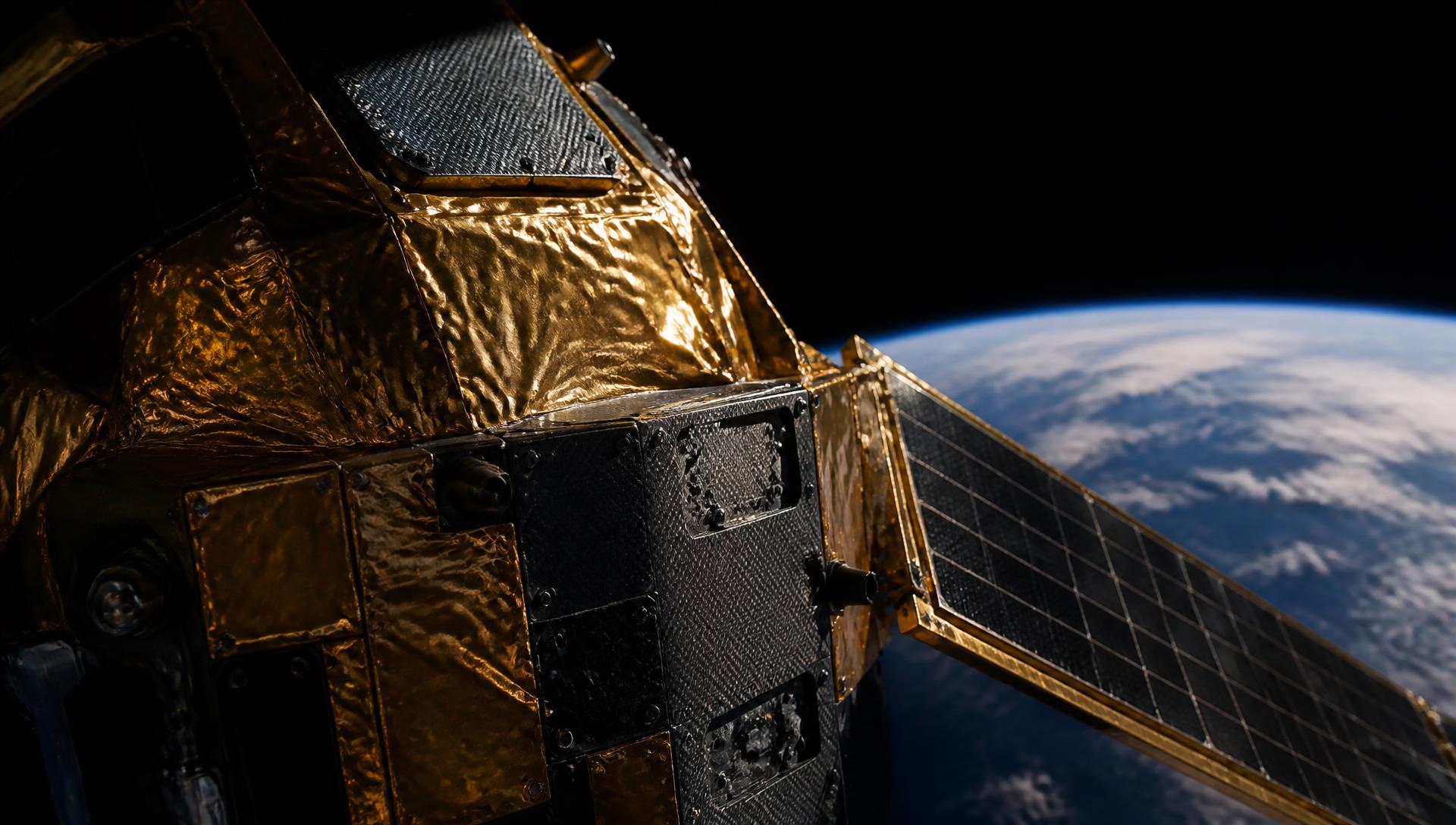
Hosted payloads, cubesats and smallsats already in production today — the cheapest credible path to a ledger above every border.
Shared orbital infrastructure
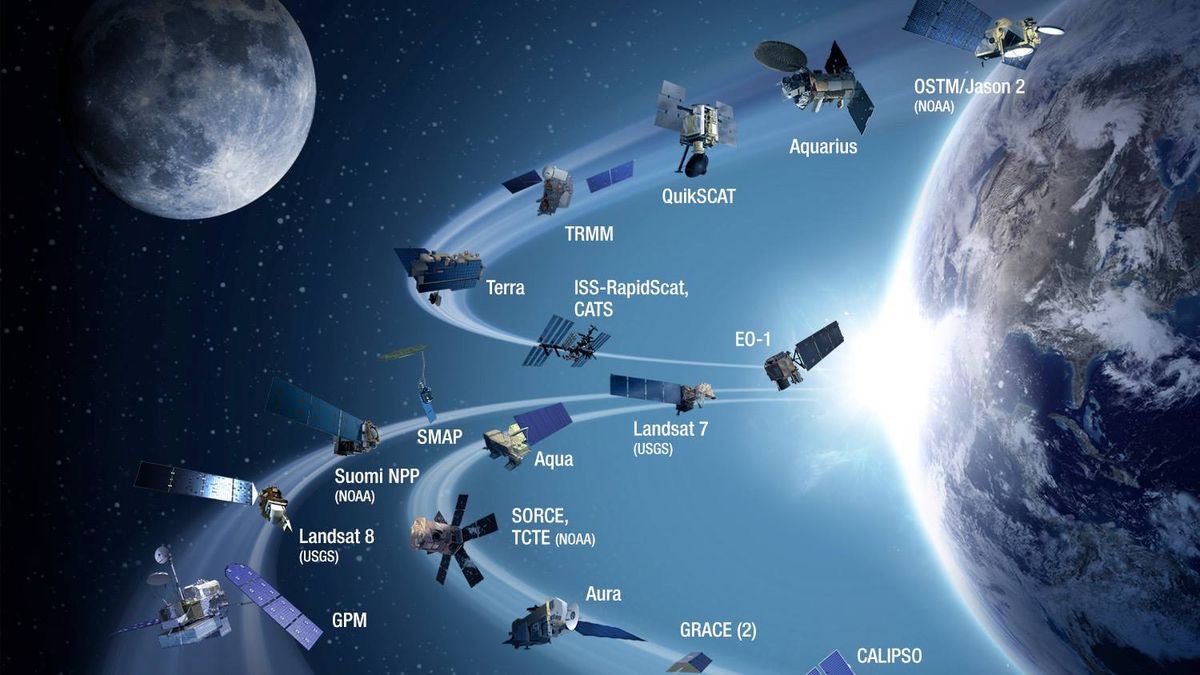
Earth-observation and science fleets already fly the orbits we need. Hosting a ledger payload beside them removes the cost of a dedicated constellation.
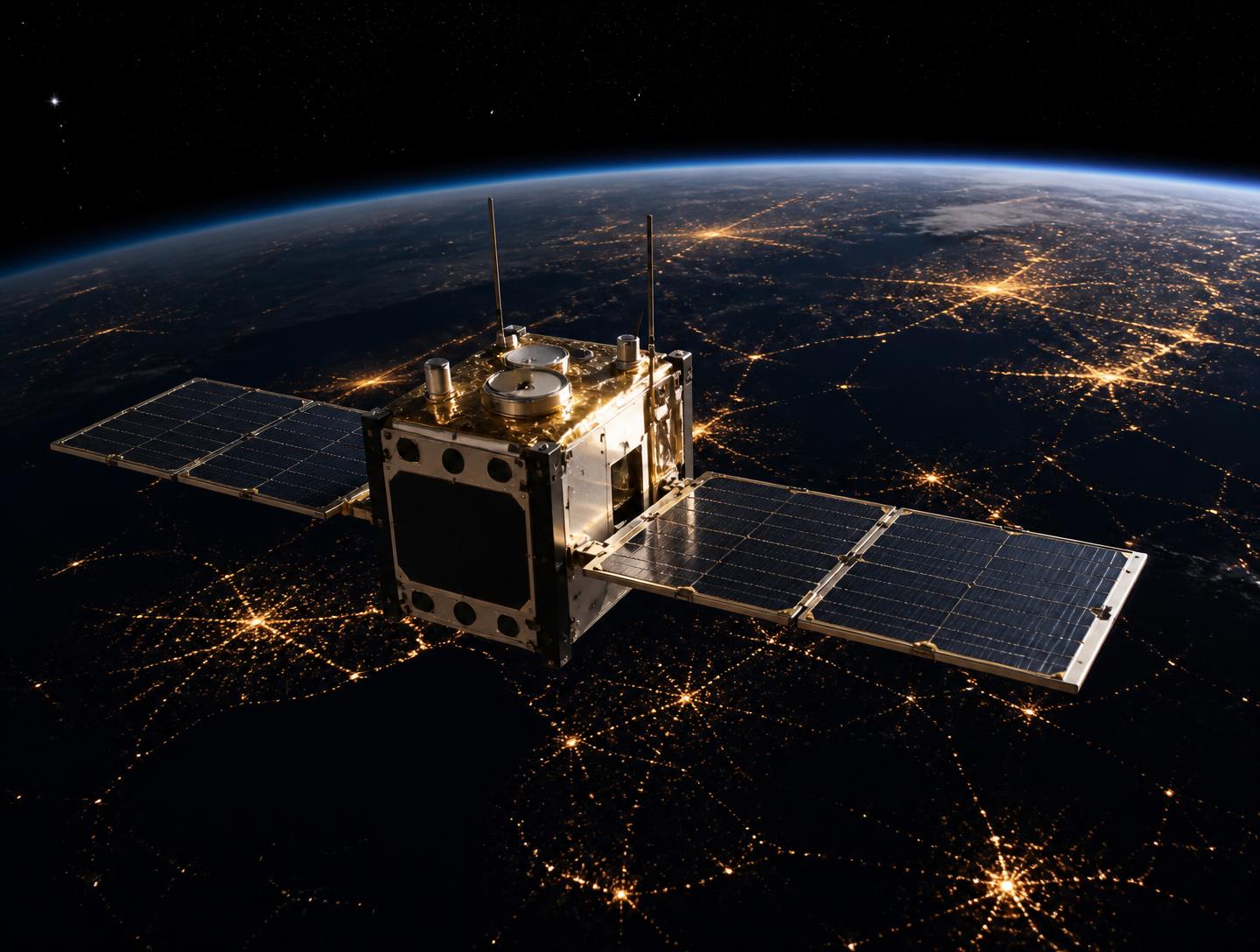
Nodes over the dark
A smallsat passing over unlit regions is the only piece of financial infrastructure many communities will ever have overhead.

Small platform, full node
Modern smallsat buses carry enough power, compute and downlink to run a signing node and an encrypted store-and-forward queue.
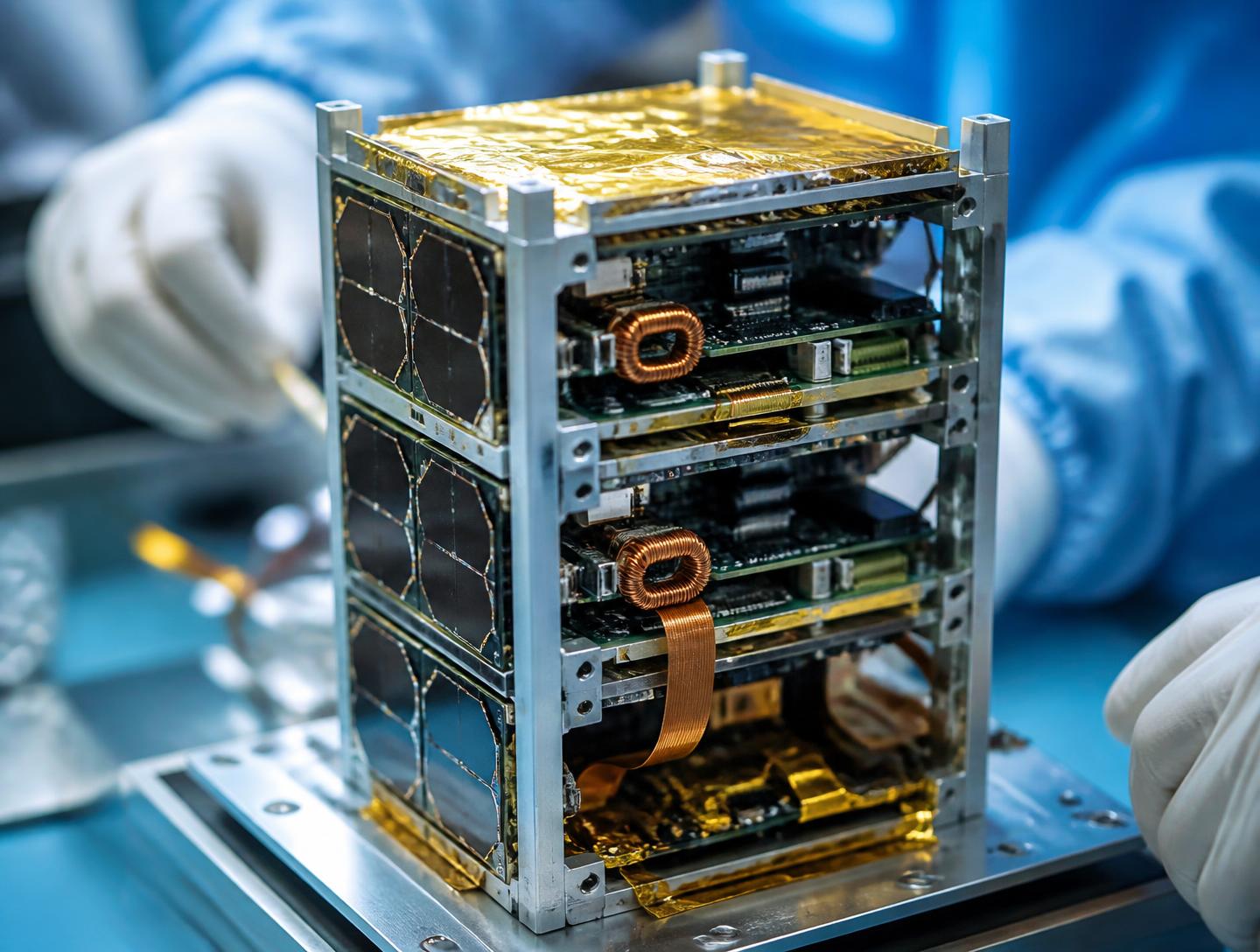
Flight hardware, off the shelf
Commodity cubesat structures, solar panels and radios keep the per-node cost within reach of a milestone-based capital plan.

Geostationary and polar coverage
A mixed orbit strategy — polar for coverage, geostationary for persistence — so no market waits for a pass.
Built to leave Earth orbit
The same node design that settles an aid payment in Malawi is the settlement layer for cislunar logistics and interplanetary missions.
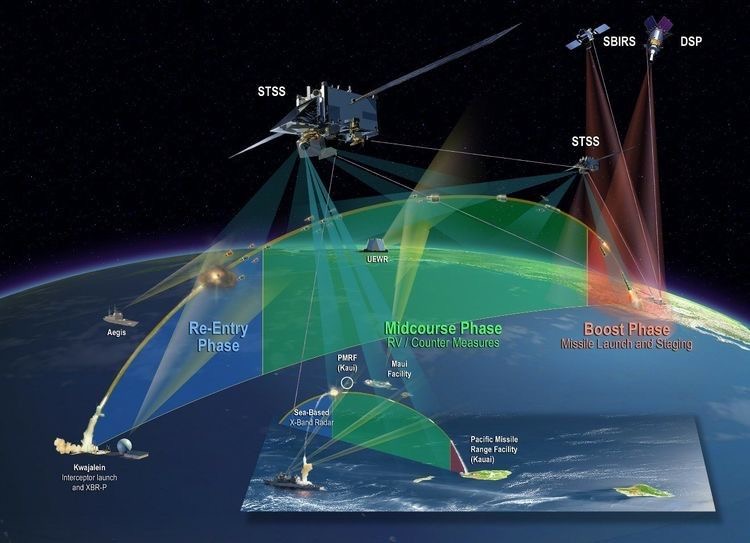
In orbit
Ledger nodes, AI inference and direct-to-device links.
The constellation is the data centre — above the grid, above the border, above the outage.
Specifications
Straight from the whitepaper.
Figures published in the August 2022 SovereignSky whitepaper, 'The World's New Operating System'.
50,000+ TPS
Throughput target for the Sovereign chain, against roughly 30 transactions per second on Ethereum and 4.5 on Bitcoin.
8 SmallSats
An equatorial constellation with inter-satellite crosslinks and three ground stations near the equator, each satellite circling Earth every 100 minutes.
BEOS on Graphene
A BitShares/EOS hybrid using delegated proof of stake — no industrial proof-of-work, and the lowest carbon profile the team could engineer.
21 nodes, 250W each
A full chain needs roughly 5.25kW — inside the solar budget of a Tiangong-2-class array, and reachable across a small constellation.
Solar Connectivity Box
A portable satellite modem, an Android handset with the app pre-installed, a wallet and a linked smart debit card — usable where there is no grid power and no wi-fi.
Hosted nodes
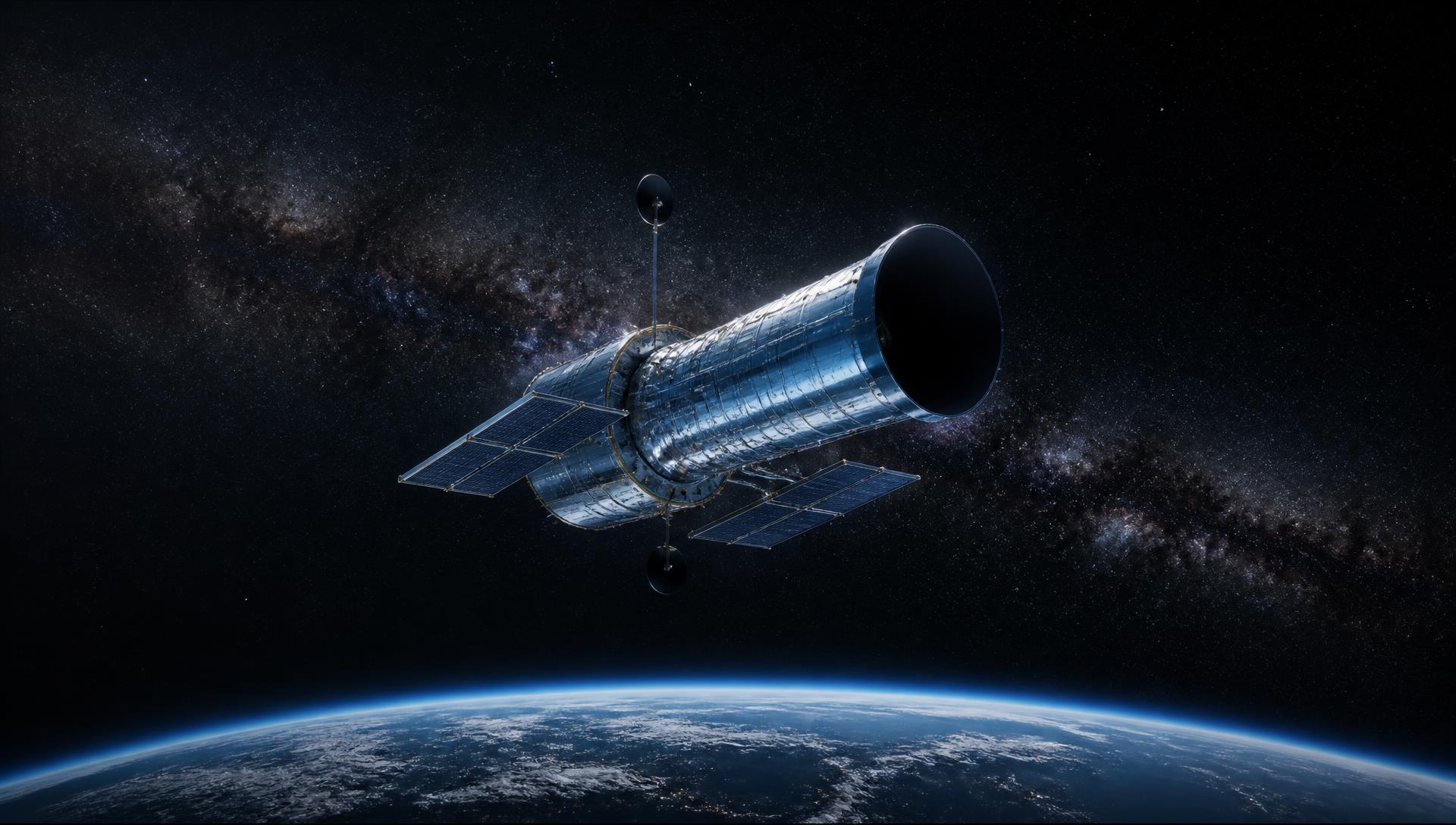
Telescopes that double as ledger nodes.
SovereignSky partnered with Mission Space to anchor 4 to 16 BEOS nodes on its constellation of orbiting optical telescopes — two in equatorial orbits, two in polar — interfacing with the purpose-built satellites in the SovereignSky fleet.
Shared platforms
Riding on existing spacecraft cuts the cost of putting consensus in orbit and spreads the network across more than one operator.
Smart contracts off-shore
Nodes execute contracts in the relative regulatory freedom of international space rather than inside any single jurisdiction.
A second use for the token
Network tokens buy observing time on the telescopes, giving researchers, educators and the public access previously reserved for large budgets.

The stack
Six layers between orbit and a hand.
Space segment
Satellites carrying ledger nodes, encrypted store-and-forward messaging and, increasingly, compute for inference at the edge of the network.
Encrypted link layer
Every payload signed and sealed in transit. Keys never leave the endpoints; the satellite carries ciphertext it cannot read.
Ground segment
Connectivity boxes with portable modem handsets, deployable to an orphanage or clinic with no permanent infrastructure.
Settlement layer
A high-throughput hybrid chain carrying SovereignAid and SovereignCoin, designed for low fees on very small transfers.
Identity & provenance
SuperFile signing turns every record the network issues into a named, verifiable, revocable artefact.
Application layer
The SpaceFile App: wallet, account, card, social graph and the AI agent that makes all of it usable to a first-time user.
A network that cannot be switched off from the ground.
Distributed orbital planes, encrypted end to end, verifiable anywhere.