
Feasibility
Nothing here needs a miracle. It needs procurement.
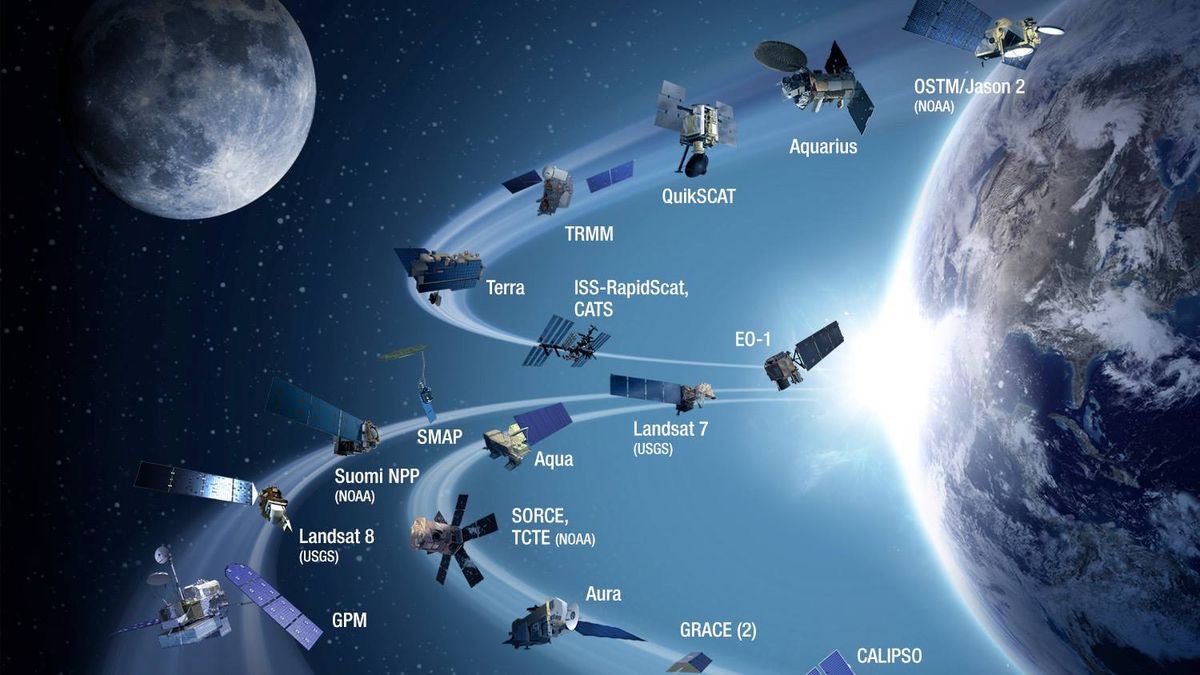
Roughly 12,000 working satellites are already in orbit, owned by companies that sell capacity, hosting and launch as products. This page names them, states what each one costs us, and sets out the cheapest credible path from a proven in-orbit signature to a financial network above the tropics.

Third-party constellations
Who already flies what we need.
Fleet sizes below are public, widely reported figures for mid-2026 and are indicative rather than contractual. Named companies are prospective suppliers or partners; except where stated as a partner of record, no agreement is in place.
SpaceX — Starlink
~9,600 active LEO satellites
Backhaul and direct-to-cell
We buy transit, not spacecraft. Starlink Community Gateways and business plans backhaul Connectivity Boxes today; direct-to-cell gives handsets a messaging path with no tower. Transporter rideshare also carries our hosted nodes.
Operating cost per site, no capital outlay
Amazon Leo (formerly Kuiper)
375+ satellites launched, enterprise beta
Second backhaul source
A second Ka-band network keeps us from depending on one operator for the ground link, and its AWS ties simplify sovereign-region cloud pairing for SuperFile Cloud.
Enterprise connectivity contract
Eutelsat OneWeb
~650 LEO satellites
Regulated-market backhaul
Sells through licensed national telcos, which is exactly how we enter markets that require a domestic licence holder. Airbus-built OneWeb-class buses are also available as hosting platforms via Loft Orbital.
Wholesale capacity via national partners
Iridium
66 cross-linked satellites + spares
Global low-rate messaging with hosted-payload heritage
Iridium's constellation famously carried the Aireon hosted payload on every satellite. Certus 9704 modules give a wallet a global, pole-to-pole path for the few kilobytes a signed transaction needs.
Per-device data plan, cents per transaction
Globalstar
~25 operational satellites
Consumer handset fallback
The network behind satellite SOS on mainstream handsets — proof that ordinary phones already reach orbit, which is the assumption the SpaceFile App rests on.
Wholesale messaging
Spire Global
~100 LEMUR cubesats
Hosted payload — Space as a Service
Spire sells slots on its own cubesats and will fly third-party software on existing hardware. This is the cheapest credible route to a ledger node in orbit: no bus to build, no launch to buy.
Hosted slot, low hundreds of thousands
Loft Orbital
YAM series + Longbow/Nova buses, $100M+ of bus inventory
Mission manager and condosat host
Loft integrates and operates other people's payloads through its Hub hardware and Cockpit software. A standard interface means our node ships as a qualified module rather than a bespoke spacecraft programme.
Fixed-price hosted mission
D-Orbit
ION carrier missions
In-orbit demonstration and last-mile deployment
ION hosts payloads and releases satellites into precise orbits — ideal for a low-cost technology demonstration before any dedicated hardware is committed.
Demonstration mission
SpaceQuest
AprizeSat / GEOScan heritage
Partner of record
The partner that flew the December 2020 in-orbit blockchain signature aboard AprizeSat-5. The relationship, the flight software and the result already exist.
Existing relationship
EnduroSat, NanoAvionics, Open Cosmos, ISISPACE
Shared and dedicated cubesat platforms
Bus and shared-satellite suppliers
Commodity 6U–16U platforms with published interface documents. Multiple qualified suppliers means node hardware is a competitive purchase, not a sole-source risk.
Shared-satellite service tiers
Planet Labs, Satellogic
~200 and ~30 imaging satellites
Data partners for aid targeting
We buy imagery and analytics rather than launching sensors: flood, drought and crop signals feed aid targeting through an API.
Data subscription
Starcloud, Axiom Orbital Data Centres, Google Project Suncatcher
Early orbital compute demonstrators
Orbital compute host in later phases
GPU-class compute has already been demonstrated in orbit and Axiom is selling orbital data-centre capacity. When it becomes purchasable at scale, our AI and archive workloads move onto it — as a tenant.
Capacity purchase, Phase 4+
The key insight
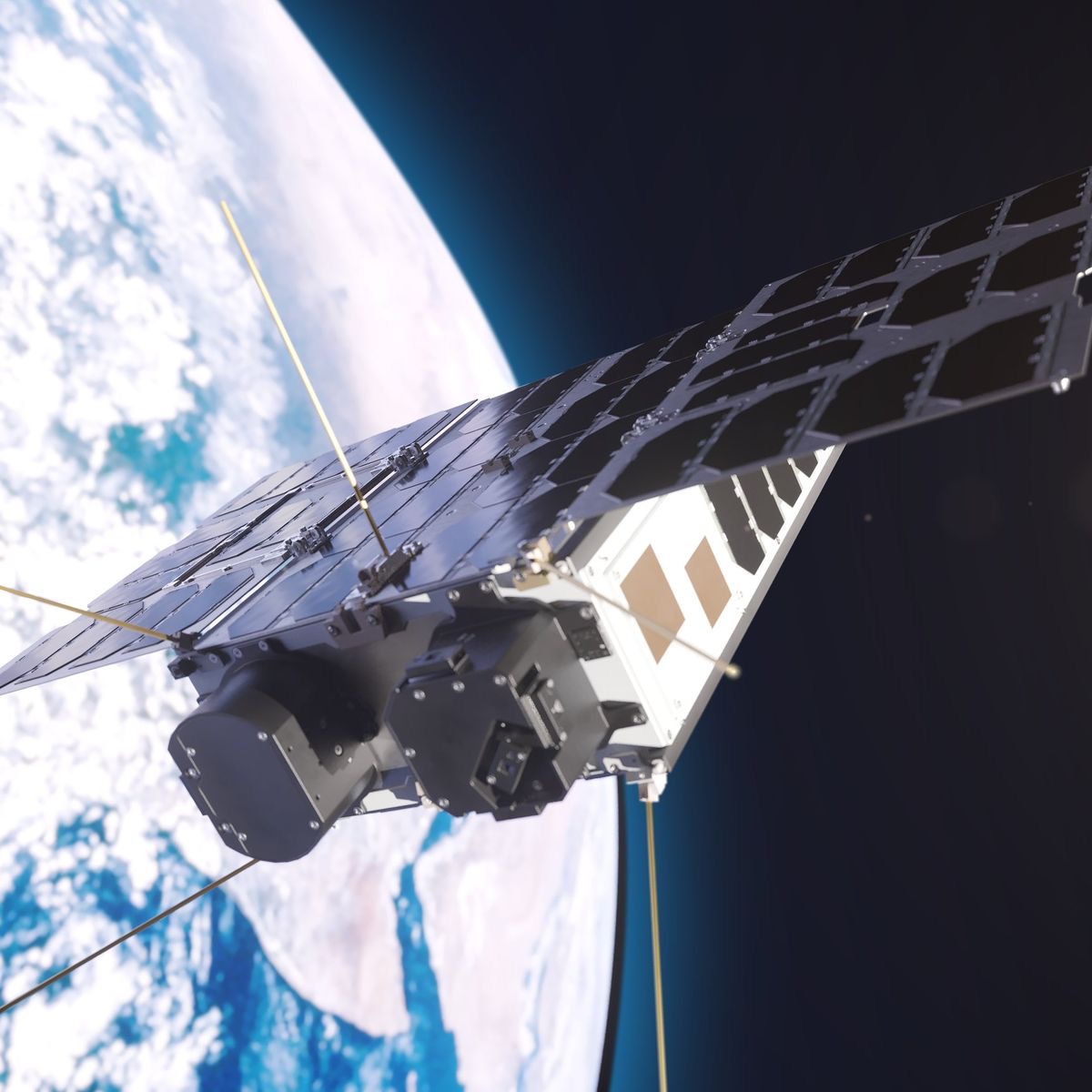
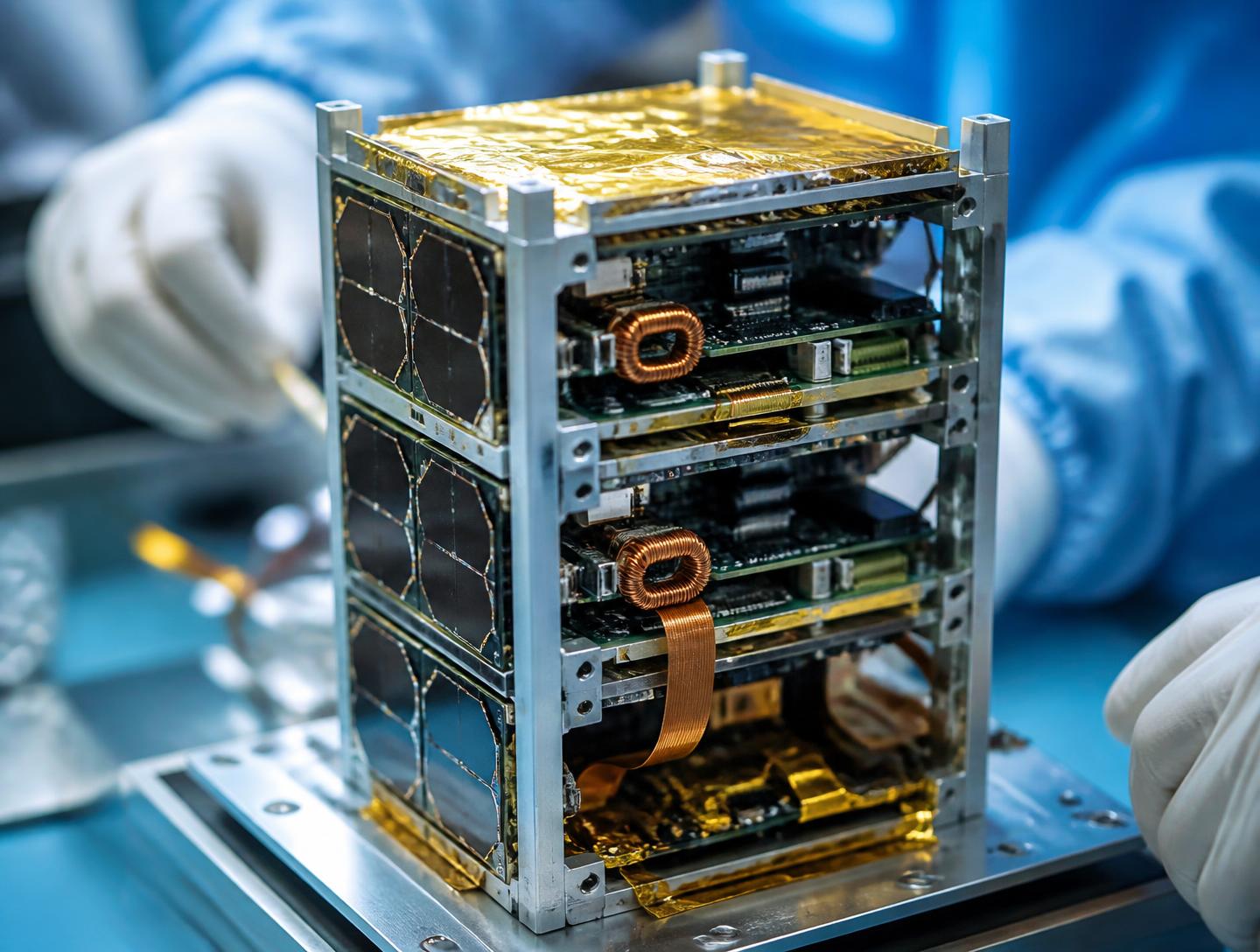
A ledger node is a small computer, not a spacecraft programme.
Hosted payloads, shared satellites and software-defined slots already exist as catalogue products. We buy one.
Launch and orbit
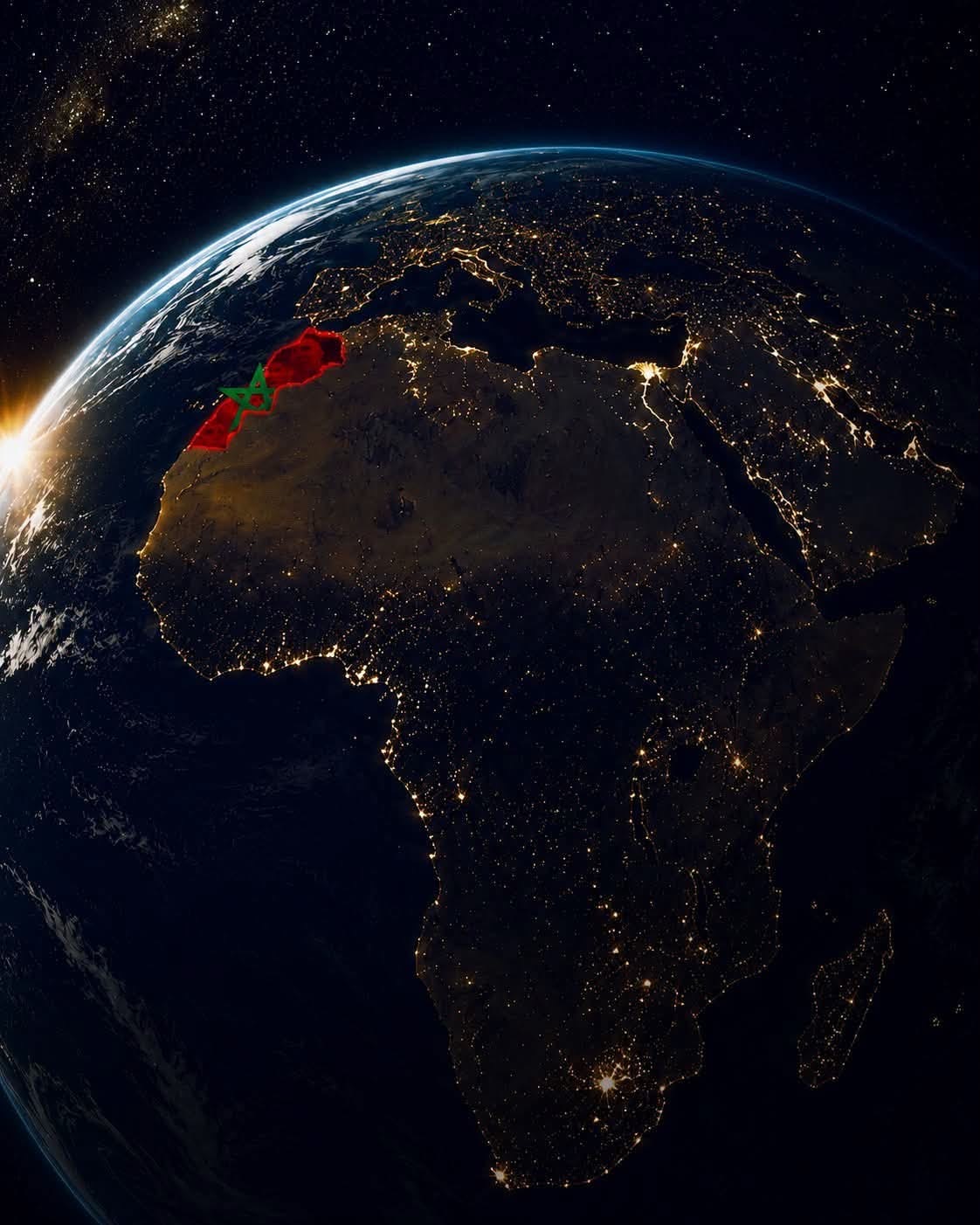
Equatorial ranges, starting with India.
Coverage should sit where the customers are. The patent specifies a low-inclination network over the tropics, and the cheapest qualified way to reach that geometry is a launch site already near the equator.
India — ISRO / NSIL, Sriharikota
13.7° NThe single best fit for this network. Sriharikota sits near the equator, so low-inclination and equatorial orbits — the geometry the patent specifies for continuous coverage of the tropics, where most unbanked people live — are reachable without an expensive plane change. PSLV and SSLV are among the lowest-cost qualified rides in the world, and NSIL sells commercial slots directly.
Primary equatorial route
SpaceX Transporter rideshare
Sun-synchronous and mid-inclinationThe price benchmark for smallsats: a fixed-price rideshare slot with launches every few months. Effective cost to orbit has fallen from tens of thousands of dollars per kilogram to a few thousand, which is the single reason this programme is affordable now and was not in 2020.
Price benchmark
Indian private launch — Skyroot, Agnikul
13.7° NA maturing second tier at Sriharikota aimed squarely at small payloads. We treat these as an option for later, cost-reducing replenishment flights once flight records exist, not as a dependency.
Emerging option
Alcântara (Brazil) and Kourou (French Guiana)
2.3° S / 5.2° NTwo more near-equatorial ranges. Keeping three equatorial options open protects the schedule against any one range or regulator becoming unavailable.
Redundancy
Rocket Lab Electron / Neutron
Dedicated small launchFor a dedicated node deployment with a specific plane and date. Materially more expensive per satellite than rideshare, so it is reserved for the phase where orbital position actually matters commercially.
Dedicated, later phase
What it costs
Indicative cost per capability.
Ranges are planning estimates built from published rideshare and hosted-payload pricing. They are the basis of the capital plan, not quotations.
| Capability | Indicative cost | How it is bought |
|---|---|---|
| Software-only node on a partner satellite | $0.2M – $0.6M | Flight software uploaded to existing hardware (Spire-style Space as a Service). No new spacecraft, no launch. |
| Hosted payload module on a partner bus | $0.5M – $2.5M | A qualified compute module integrated by a mission manager such as Loft Orbital or D-Orbit, launched on rideshare. |
| Dedicated 6U–16U cubesat node | $1.5M – $5M | Bus, integration, licensing and a rideshare slot. Only justified once traffic and sovereign requirements demand our own asset. |
| Ground segment, first two regions | $0.3M – $0.8M / yr | Leased pass time from commercial ground-station networks plus a software mission-operations centre. No teleport construction. |
| Bought connectivity per Connectivity Box | $50 – $250 / month | Starlink, OneWeb or Iridium capacity, sized to the site. Scales with revenue rather than ahead of it. |
For comparison: a dedicated small-satellite programme with its own bus, launch and ground segment has historically cost $10M or more per spacecraft. The hosted route is roughly an order of magnitude cheaper, which is why every early phase uses it.
How much capacity does the ledger actually need?
One orbital node needs roughly 10 watts, 1.5U of volume and 256 GB of storage, and moves about 250 MB a day. Against buses that publish 10–60 watts and 7–24 kilograms of payload capacity, eight independent nodes is the smallest genuinely fault-tolerant cluster. The capacity page shows the full arithmetic, the fit against each supplier's published specification, and the cost of every configuration.

Plan of action
Six steps, cheapest first.
Each step is fundable on its own, produces something a customer pays for, and lowers the cost of the step after it.
01
Step 1 — Re-fly the proof, cheaply
0–9 monthsPlannedUpload the ledger node as software to a partner satellite already in orbit and repeat the 2020 signature with modern post-quantum signing. Lowest-cost possible demonstration; no launch required.
02
Step 2 — Buy the ground network
6–18 monthsPlannedStand up Connectivity Boxes on bought Starlink/OneWeb/Iridium capacity in two launch corridors, with a licensed financial partner in each. Revenue starts here, from connectivity and payments, not from space.
03
Step 3 — Sell notarisation on Earth
PlannedSuperFile Cloud and notarisation run in terrestrial sovereign regions and generate contracted institutional revenue while the orbital tier is still small. Orbit anchors the records; it does not gate the product.
04
Step 4 — First hosted payload module
18–30 monthsPlannedOne qualified compute module on a partner bus via a mission manager, launched on rideshare from an equatorial range. Fixed price, fixed date, insurable.
05
Step 5 — Equatorial cluster
2–4 yearsPlannedThree to eight hosted or shared nodes on low-inclination orbits out of Sriharikota, giving repeated daily passes over the tropics. Funded by the revenue from steps 2 and 3.
06
Step 6 — Own only what must be owned
4+ yearsPlannedDedicated satellites and orbital data-centre tenancy only when traffic, sovereign contracts and unit economics prove ownership is cheaper than renting.
What we do not claim
The honest limits of the plan.
An investor should be able to see the risks stated in our own words.
No constellation is flying yet
One in-orbit signature has been demonstrated. Everything beyond that is planned, and every planned item on this site is labelled as such.
Regulation is the long pole
Payments, remittances and spectrum are licensed activities. We enter each market through partners who already hold the licence, which slows expansion but keeps it lawful.
Partners are prospective
Except SpaceQuest, the companies named here are suppliers we intend to buy from on commercial terms. No exclusivity, and no dependency on a single one of them.
Investor FAQ
The questions we get asked first.
Does any of this require SuperFile to build a rocket or a constellation?
No. Every capability in the first four steps is purchased from operators who already fly hardware: connectivity from Starlink, OneWeb, Iridium or Globalstar; hosting from Spire, Loft Orbital or D-Orbit; pass time from commercial ground-station networks; launch from rideshare. Owned satellites appear only in the final phase, and only if traffic justifies them.
Has a blockchain transaction actually been signed in space?
Yes. On 13 December 2020 a signature was produced on-orbit aboard SpaceQuest's AprizeSat-5 and matched the ground checksum. It was reported at the time and is the reason this programme starts from a result rather than a concept.
Why does the equator matter, and why India?
Most of the world's unbanked population lives in the tropics. A low-inclination orbit passes over that band repeatedly every day instead of wasting coverage on the poles. Sriharikota sits at 13.7° N, so low-inclination insertion needs no costly plane change, and PSLV/SSLV are among the cheapest qualified rides available commercially.
What happens to the business if the orbital tier slips?
Nothing fatal. Cloud, identity, notarisation, payments and connectivity all run on terrestrial infrastructure and carry their own revenue. The orbital tier improves resilience and sovereignty and unlocks premium government contracts; it is not a precondition for the product working.
How is the ledger updated on a satellite you do not own?
A ledger node is a small, well-bounded software workload. Hosted-payload providers already sell exactly this: a compute slot with a published interface, an operator-managed uplink and the ability to update flight software on orbit. Our keys stay ours; the host provides power, thermal control and a radio.
Is this a token offering?
No. Nothing on this site is an offer of securities or tokens. Revenue in the plan comes from contracted services — cloud, notarisation, connectivity, payment and aid-settlement fees — and any future listing would be conducted through regulated channels.