
The SpaceFile App
A bank account that arrives with a download.
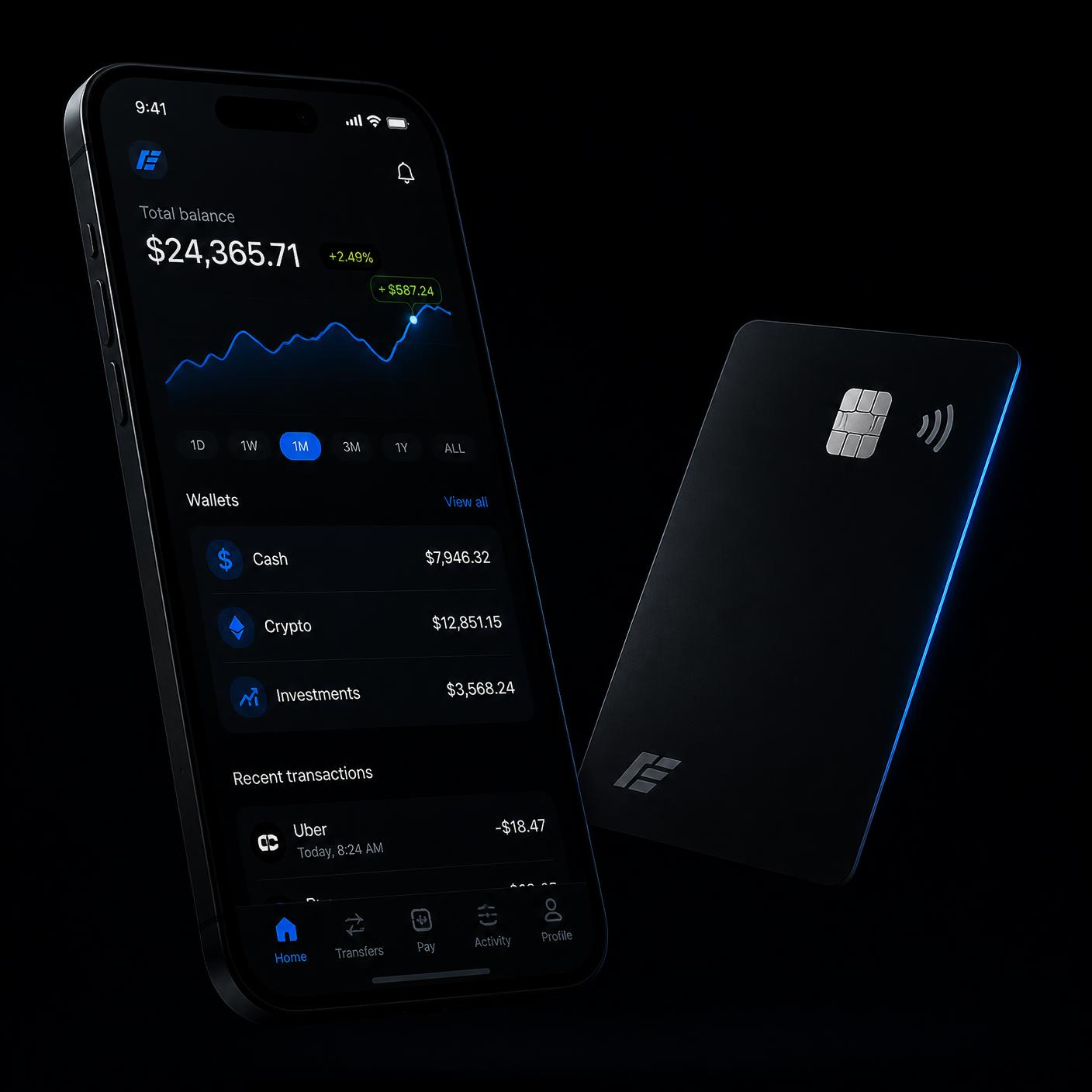
SpaceFile — previously known as RUON — is where the network meets a person: an account, a multi-chain wallet, a smart card and a social layer that lets value be earned, sent, spent and given from a single handset.
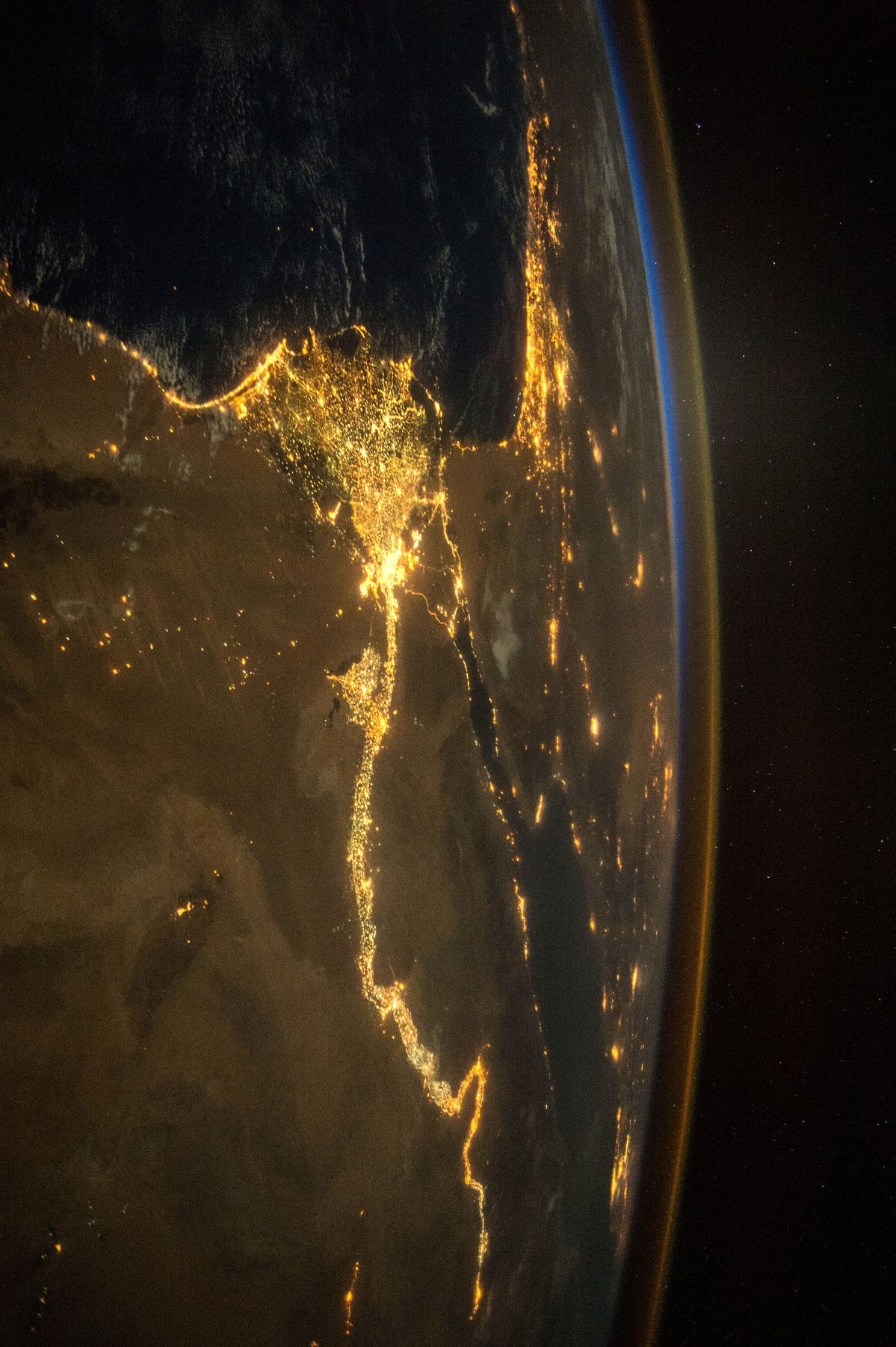
Post. Stream. Earn. Spend. Give.
Five verbs that make an economy.
The app was designed from the start as more than a wallet. People earn from what they post, spend from what they earn, and give directly to people they can see.
- Your own account number, routing details and smart card on sign-up.
- Multi-chain wallets holding SovereignAid, SovereignCoin and major assets side by side.
- Earn from content you post — value flows from audience to creator without a platform tax.
- Give directly to a verified profile: an orphanage, a clinic, a conservation project, a family.
- Spend anywhere card payments are accepted, including offline-tolerant flows for weak connectivity.
Heritage
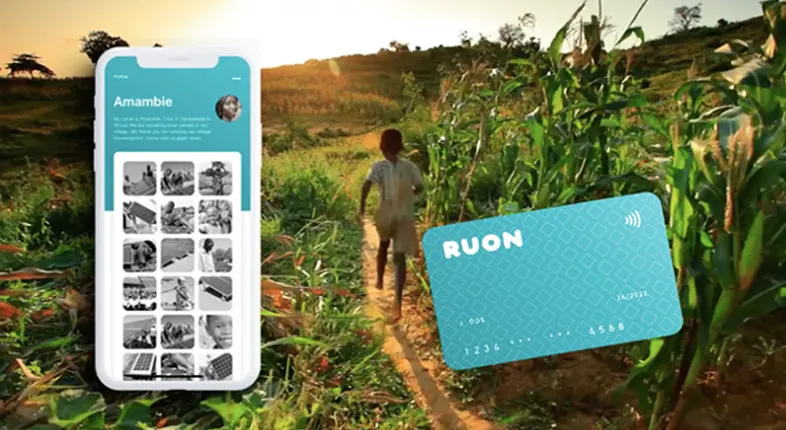
The original build, now carried forward as SpaceFile.
The app and contactless card shipped under the RUON name: a profile, a story, a village, and a card that spends the value sent to it. Same product line, same field testing, new branding under SuperFile.

Sovereign Wallet
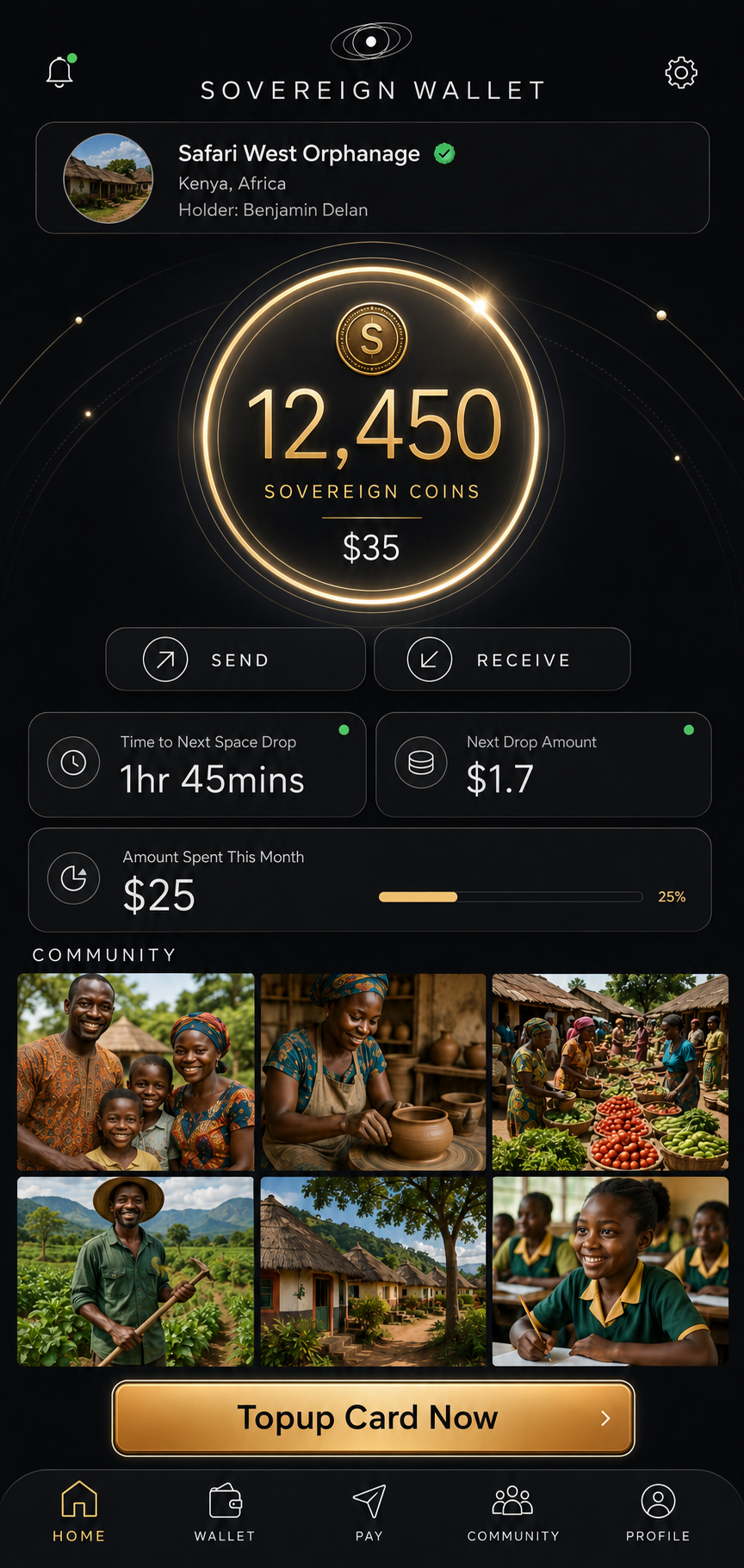
One screen: balance, space drops and the people you support.
The wallet home shows a verified holder profile, the balance in SovereignCoin and its local-currency value, the countdown to the next space drop, month-to-date spend, and the community the account is attached to. Card top-up sits one tap away.
The field kit
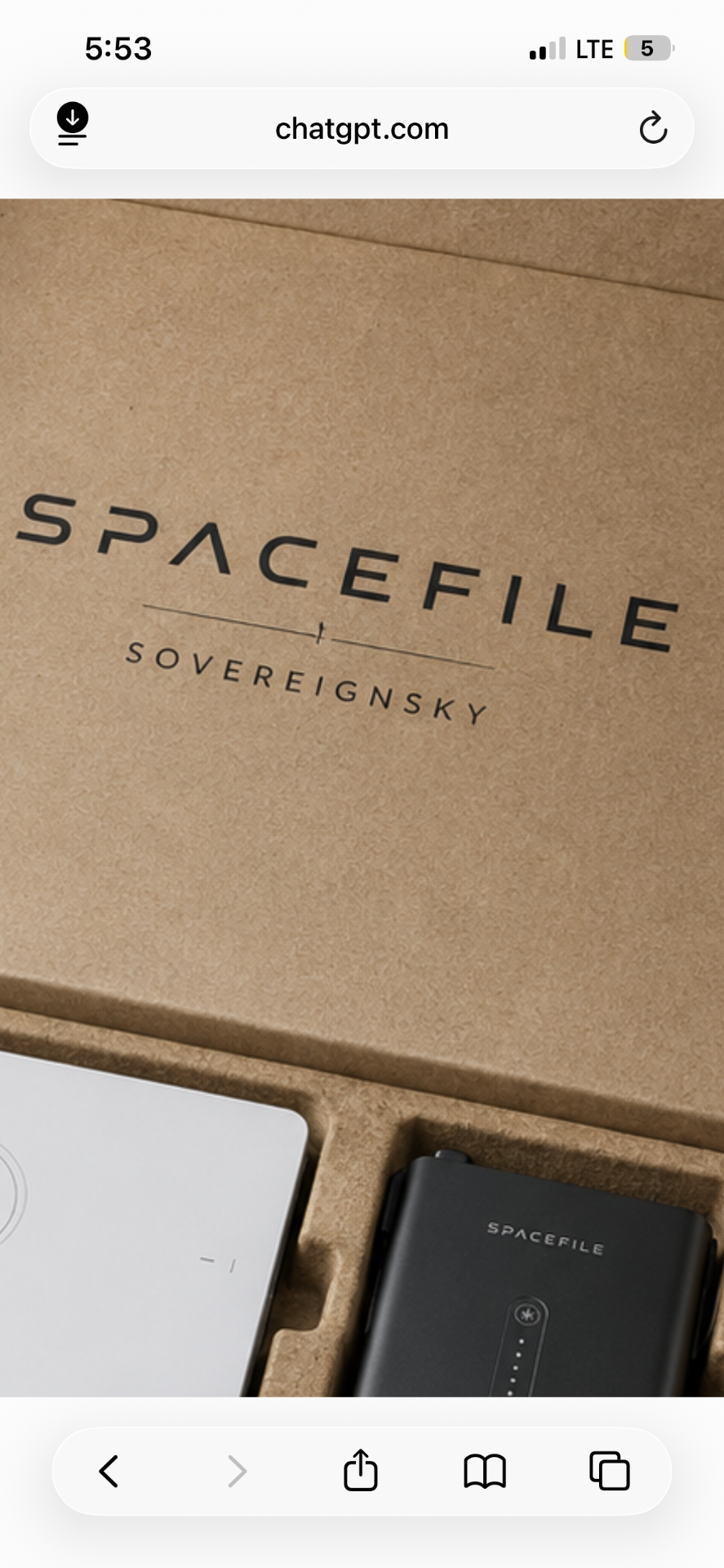
A card and a connectivity box, in one package.
Field partners receive the account as physical hardware: a SpaceFile smart card for everyday spending and a portable connectivity unit that links the handset to the network where terrestrial coverage stops.
What's new since 2020
Five years of AI, folded into the app.
The original concept predated modern foundation models. These are the capabilities the network can now carry — on the handset, at the ground station and increasingly on the satellite itself.
Voice-first, any language
Speech interfaces mean literacy is no longer a barrier to holding an account. A user talks to the app in their own language and it answers.
Identity without paperwork
On-device biometric and behavioural verification builds a portable, user-owned identity for people who have never held a document.
Fraud caught before it lands
Models score every aid transfer in flight, protecting recipients from diversion and donors from misuse.
Aid targeted by need
Earth-observation and on-ground signals help route funds to the communities where they will do the most, fastest.
An agent in every pocket
A personal financial agent that budgets, saves, explains and negotiates on behalf of someone who has never had an adviser.
Capabilities on this page describe the planned SpaceFile product. Features, availability and regulatory permissions vary by market and are subject to change.

Guardian AI
Reaching people before the danger does.
One claim in the patent filing describes a system that scans news, blogs, forums and social channels to identify people endangered by war, famine or an oncoming natural disaster, builds a profile of who is at risk, and puts that profile in front of donors who can send funds before the event — not after.
Detect
Signals from open sources and Earth observation flag communities in the path of a cyclone, a conflict front or a failing harvest.
Match
At-risk profiles are surfaced to individuals, companies, foundations and agencies who choose exactly who to help.
Deliver
Value moves over the orbital ledger to a wallet and a card on the ground, days before the road closes or the bank does.
Under the hood
What ships with an account.
The specifications published across the project record, carried into SpaceFile.
An account, not just a wallet
Sign-up issues an account number, routing details and a smart card posted to the holder — a first bank account for people the banking system never reached.
Chain-agnostic custody
Wallet technology built on BIP47 and Open Transactions, so any supported asset can be held and moved in real time with full user autonomy.
Spendable anywhere cards work
The linked smart card works at any terminal accepting standard card payments, turning received aid straight into food, water, medicine and school supplies.
Two-way proof
Recipients post photos, video and messages showing how funds were used; double-entry blockchain accounting makes the trail auditable end to end.
From the patent filing
The app, as it was claimed.
The drawings in WO2021/030288 specify the SpaceFile interface in detail — the four core screens, the social layer, user discovery, interest groups, geolocated coin drops and paid tasks. Each card below carries the figure it comes from.
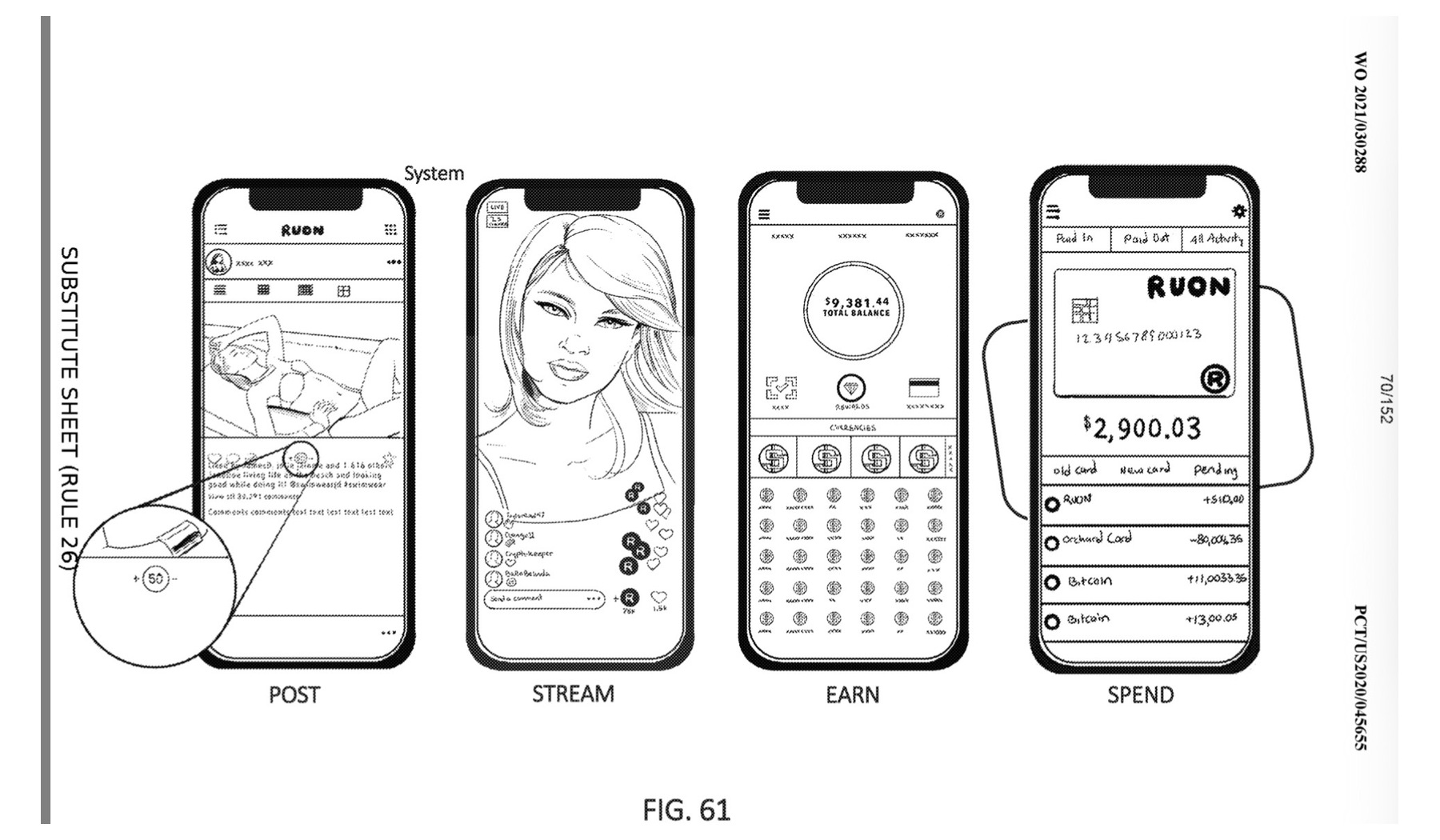
Four screens, one economy
The claim describes a single app where a post can earn, a stream can be tipped, a balance holds several assets at once, and the linked card spends what arrived — no bank in the loop.
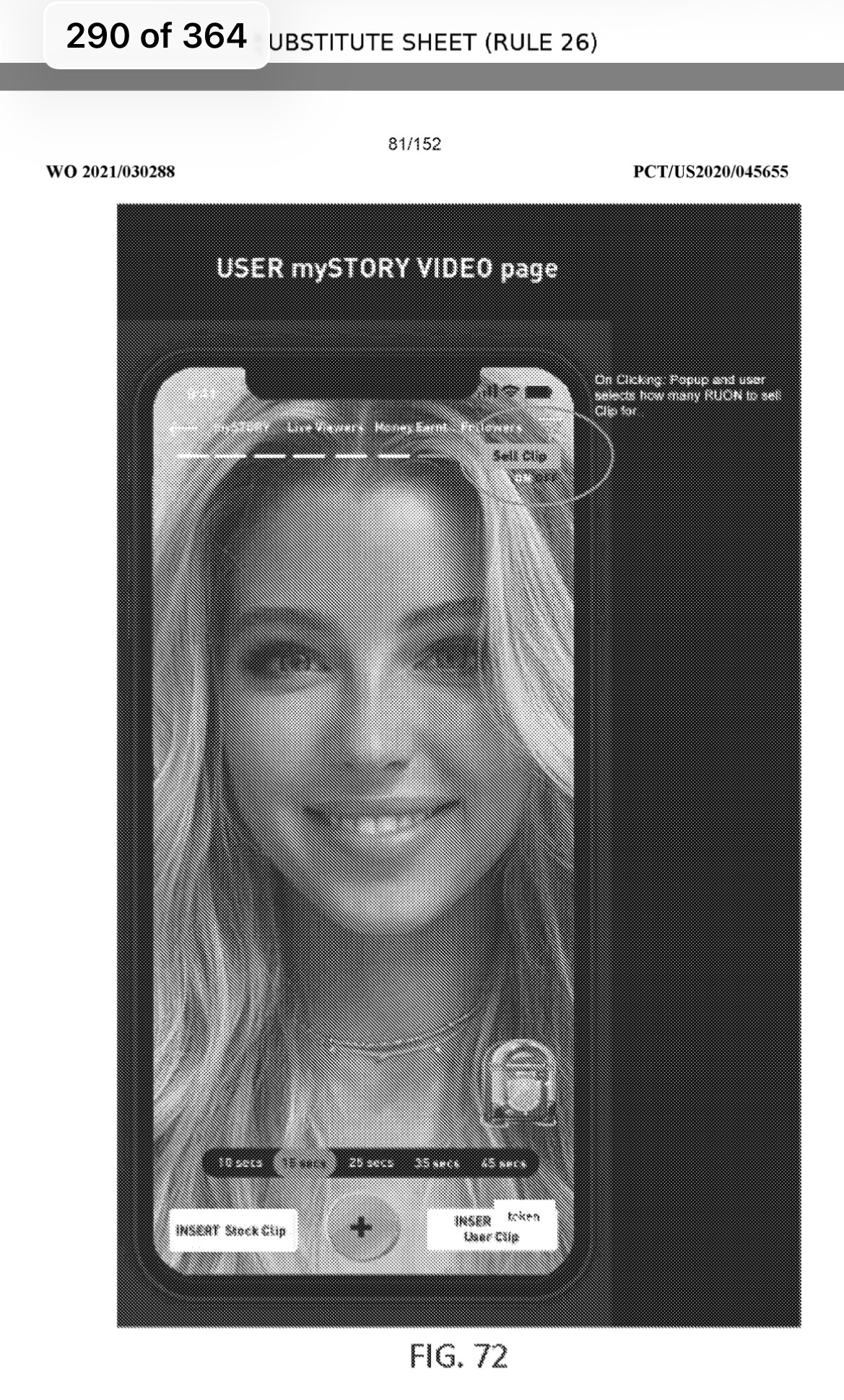
Content priced by its creator
A story clip can be sold directly to viewers at a price the creator sets, with live viewers and money earned shown on the same screen — income from attention, paid on the ledger rather than by an advertiser.
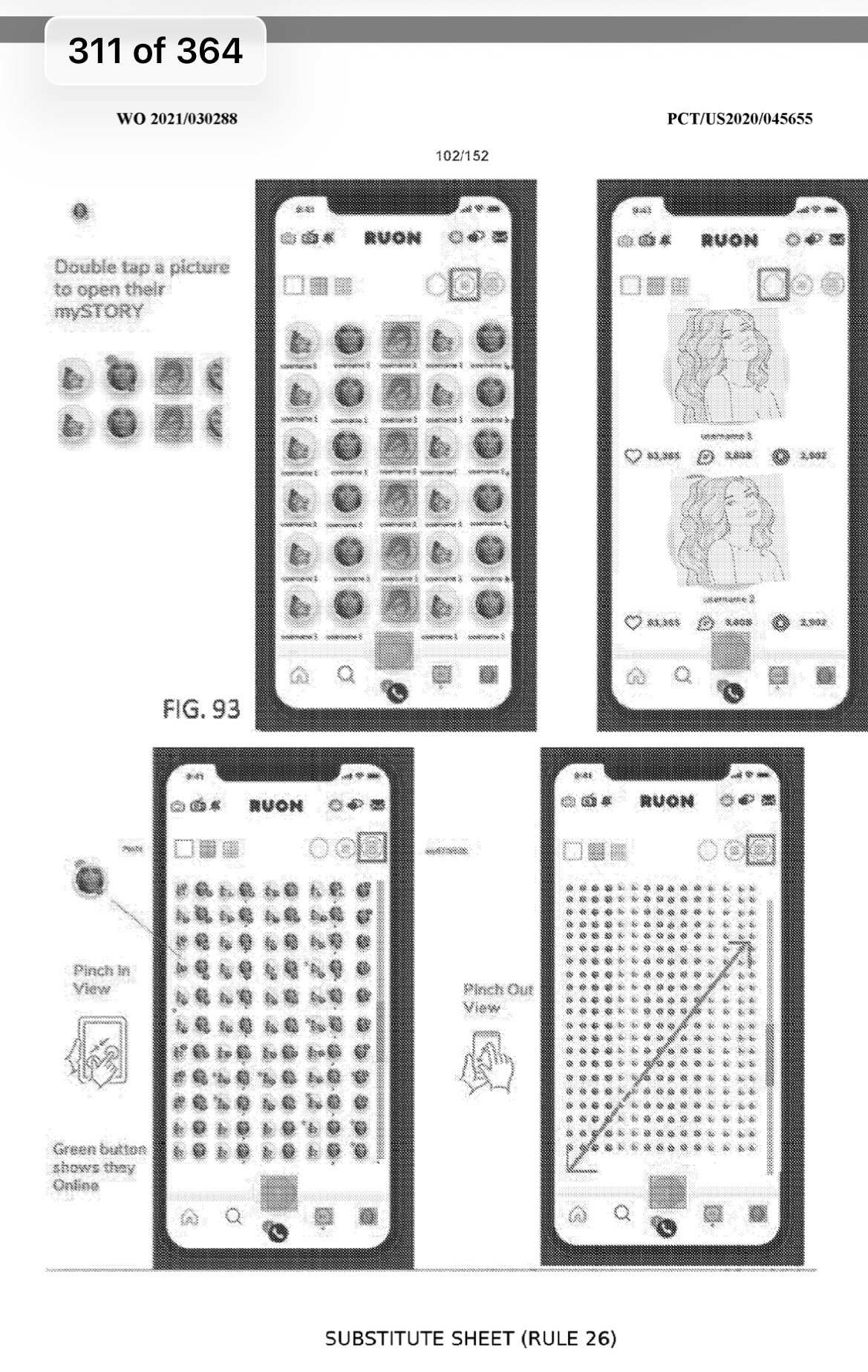
People first, posts second
The social layer opens on people, not an algorithmic wall: double tap any face to open their myStory, and a green marker shows who is online right now for a live call or transfer.
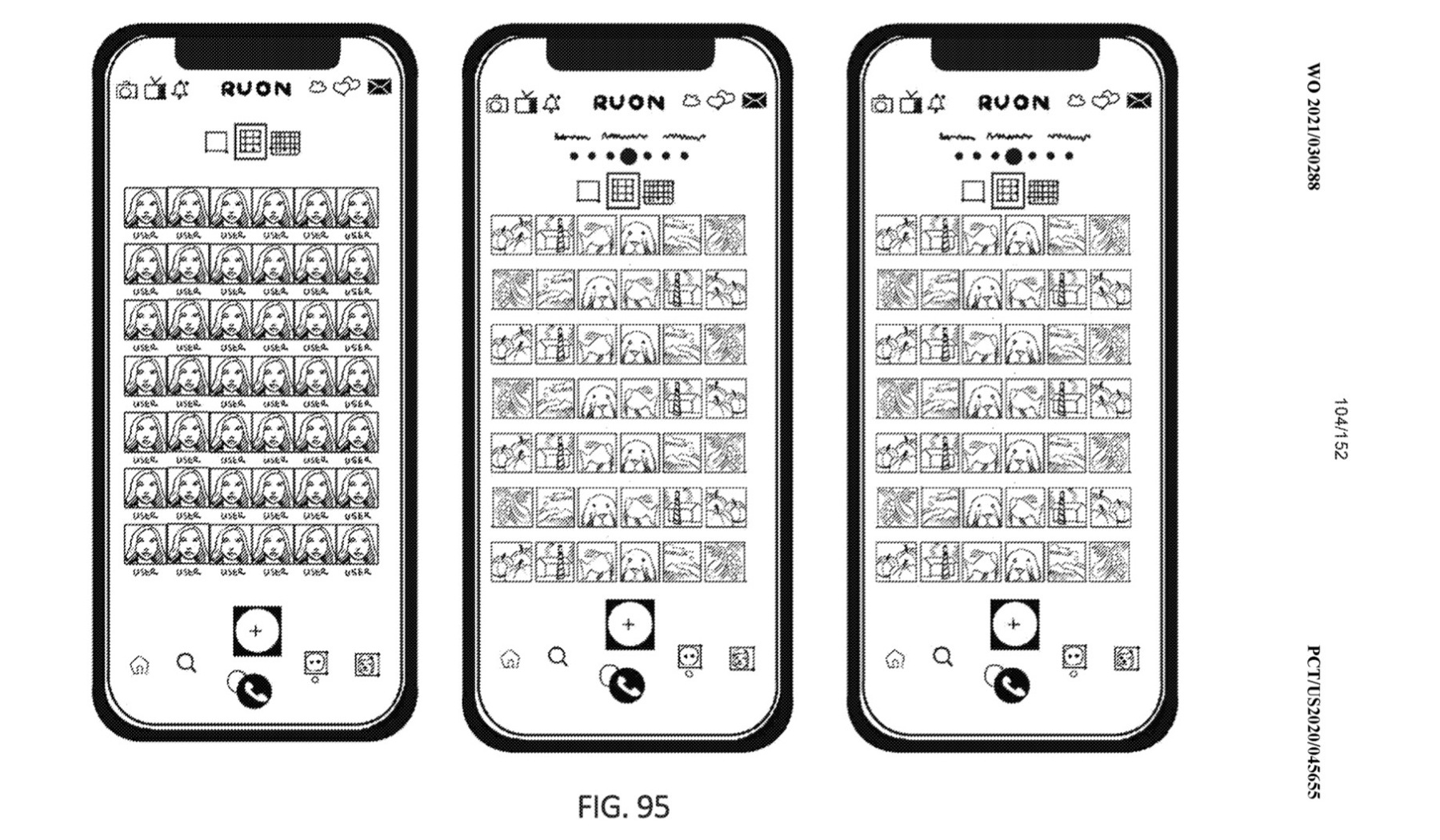
Discovery that scales with bandwidth
The same discovery surface renders at three densities. On a thin satellite link the grid loads coarse and fills in; on a strong link it expands into full posts and profiles.
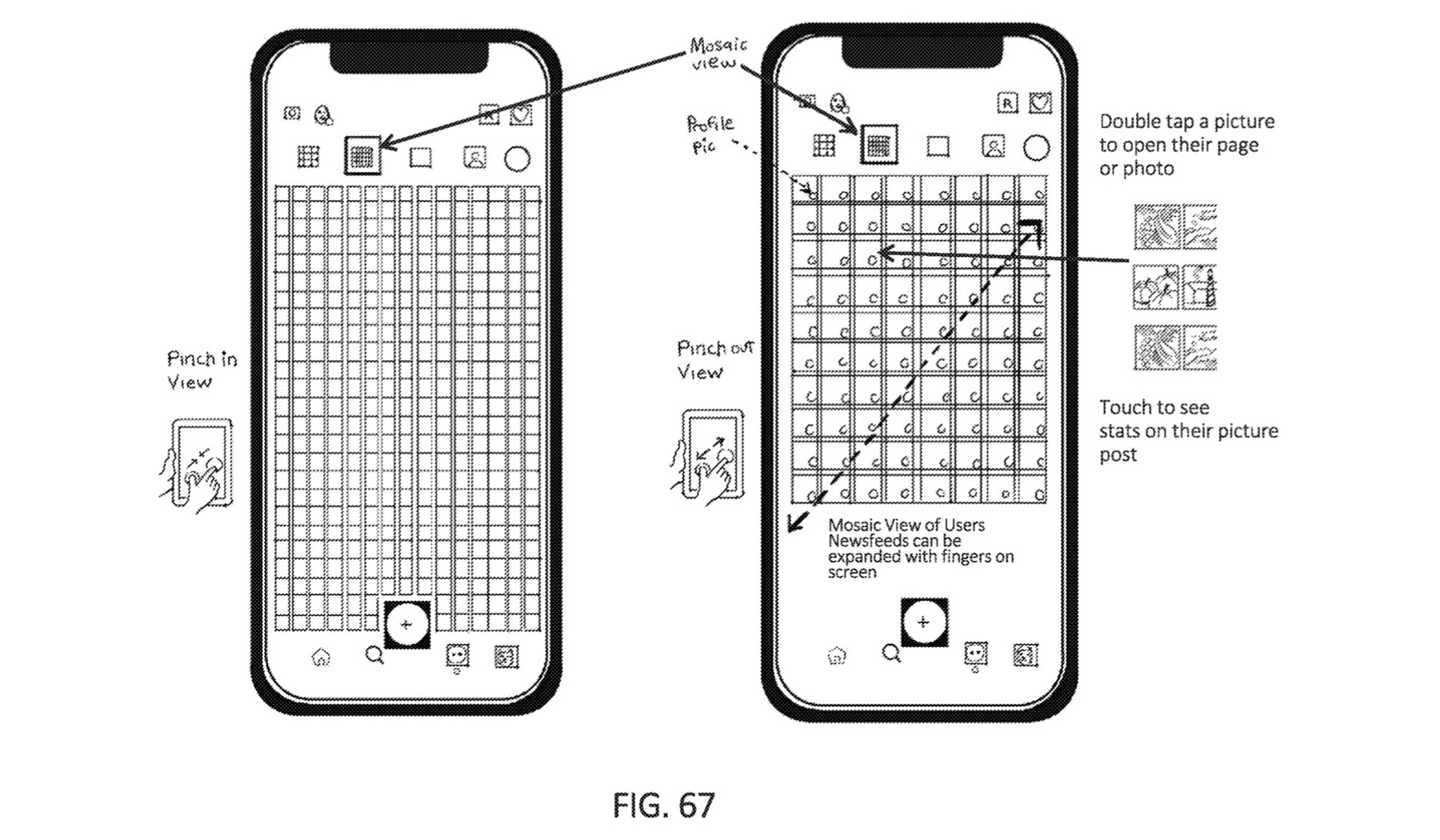
A whole network on one screen
Mosaic view compresses every followed newsfeed into a single tiled canvas that pinches open into individual pages and post statistics — navigation without endless scrolling.
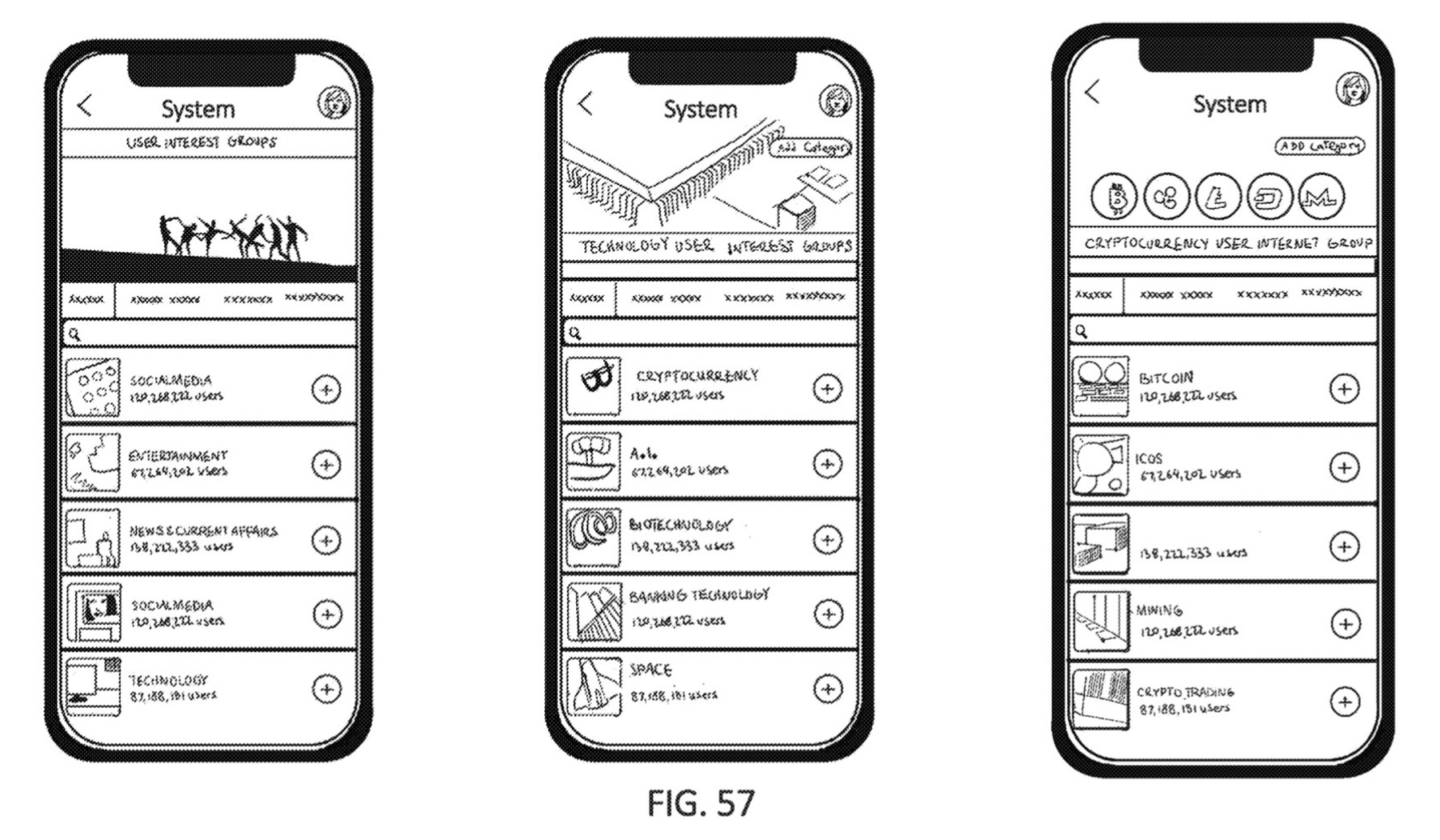
Interest groups, not feeds
Users join nested interest groups — social media, news, technology, then cryptocurrency, AI, banking technology, space — each with its own membership count, so communities and their economies are addressable directly.
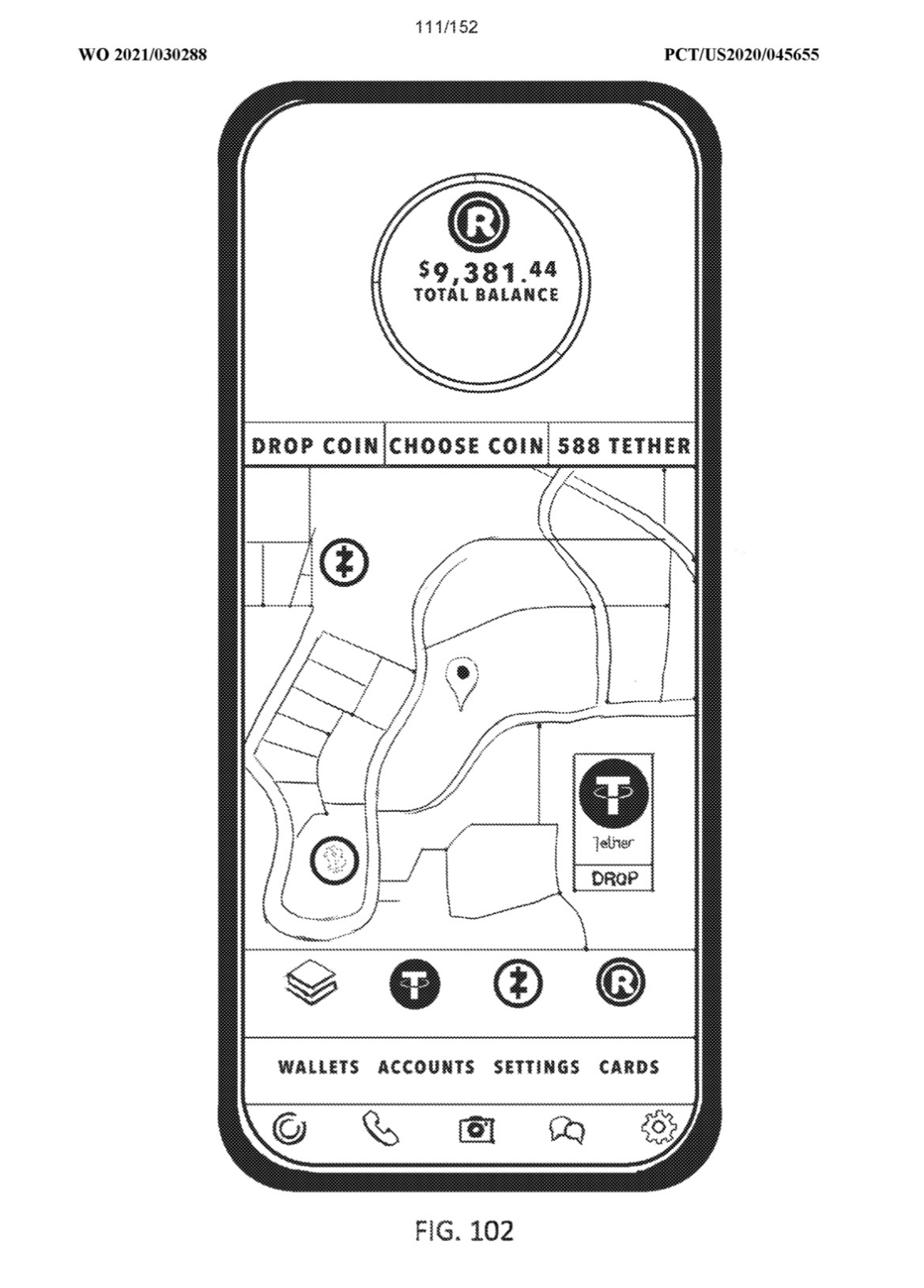
Value dropped on a place
The filing describes geolocated value: choose an asset and drop it at a location for someone to collect — a mechanism for tipping, rewards and targeted aid tied to physical ground rather than an account number.
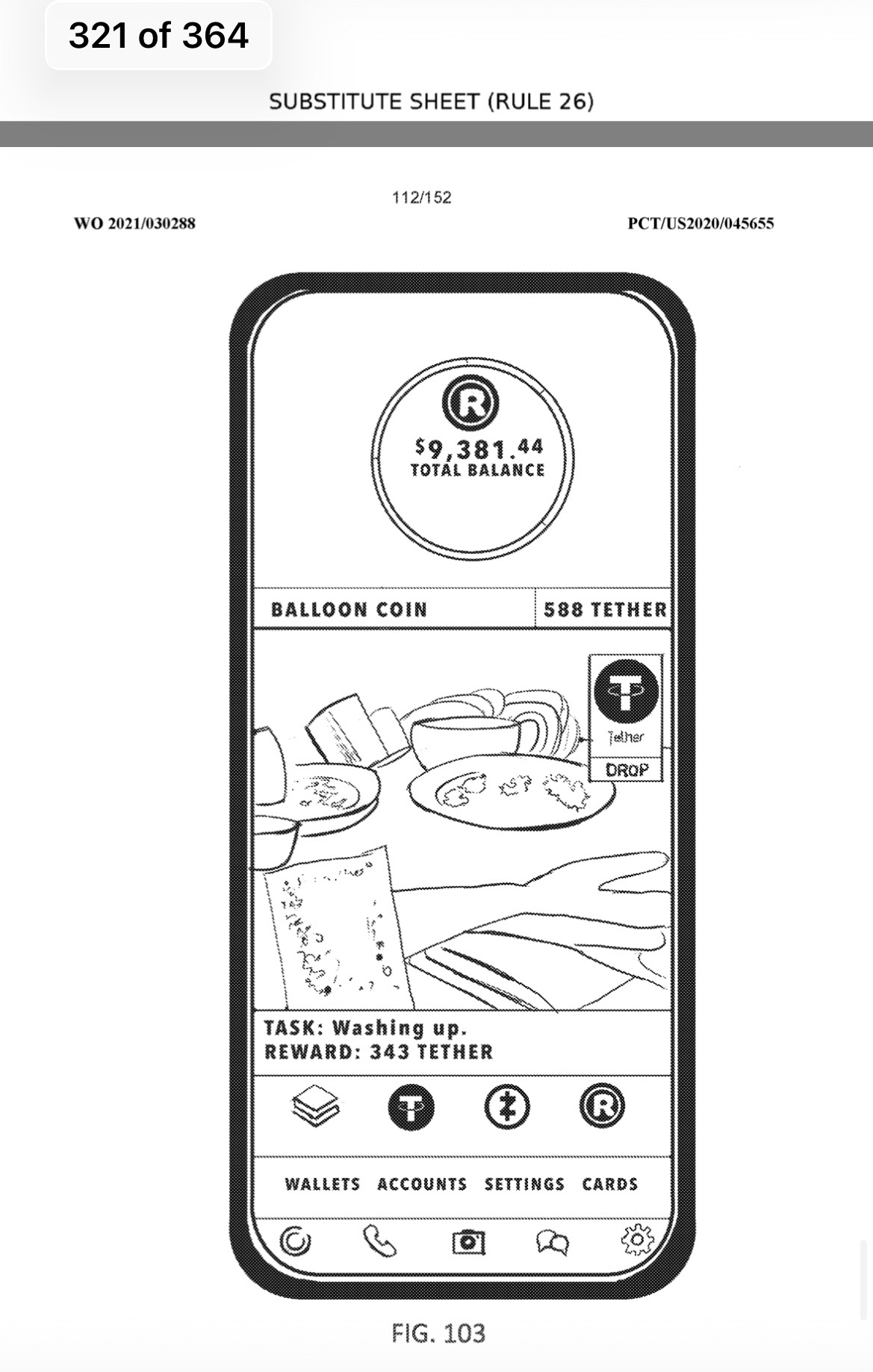
Paid work, posted and settled
Any user or business can post a task with an attached reward in a chosen asset. Completion settles on the ledger, creating micro-income for people with no employer and no payroll.
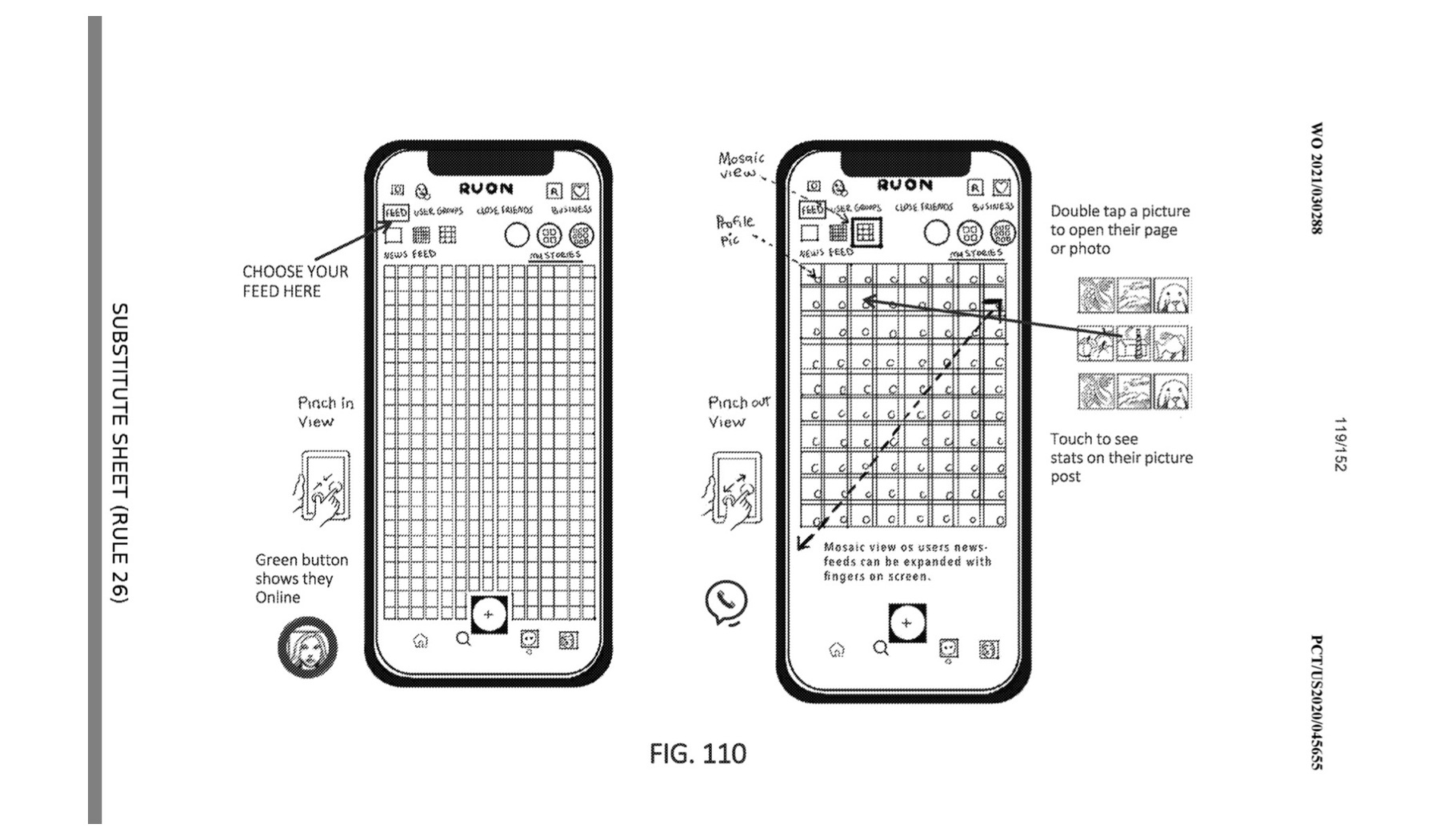
A feed built for thin bandwidth
Users choose their own feed and pinch between a dense mosaic and full posts, so a satellite pass can deliver thumbnails first and detail only on demand.
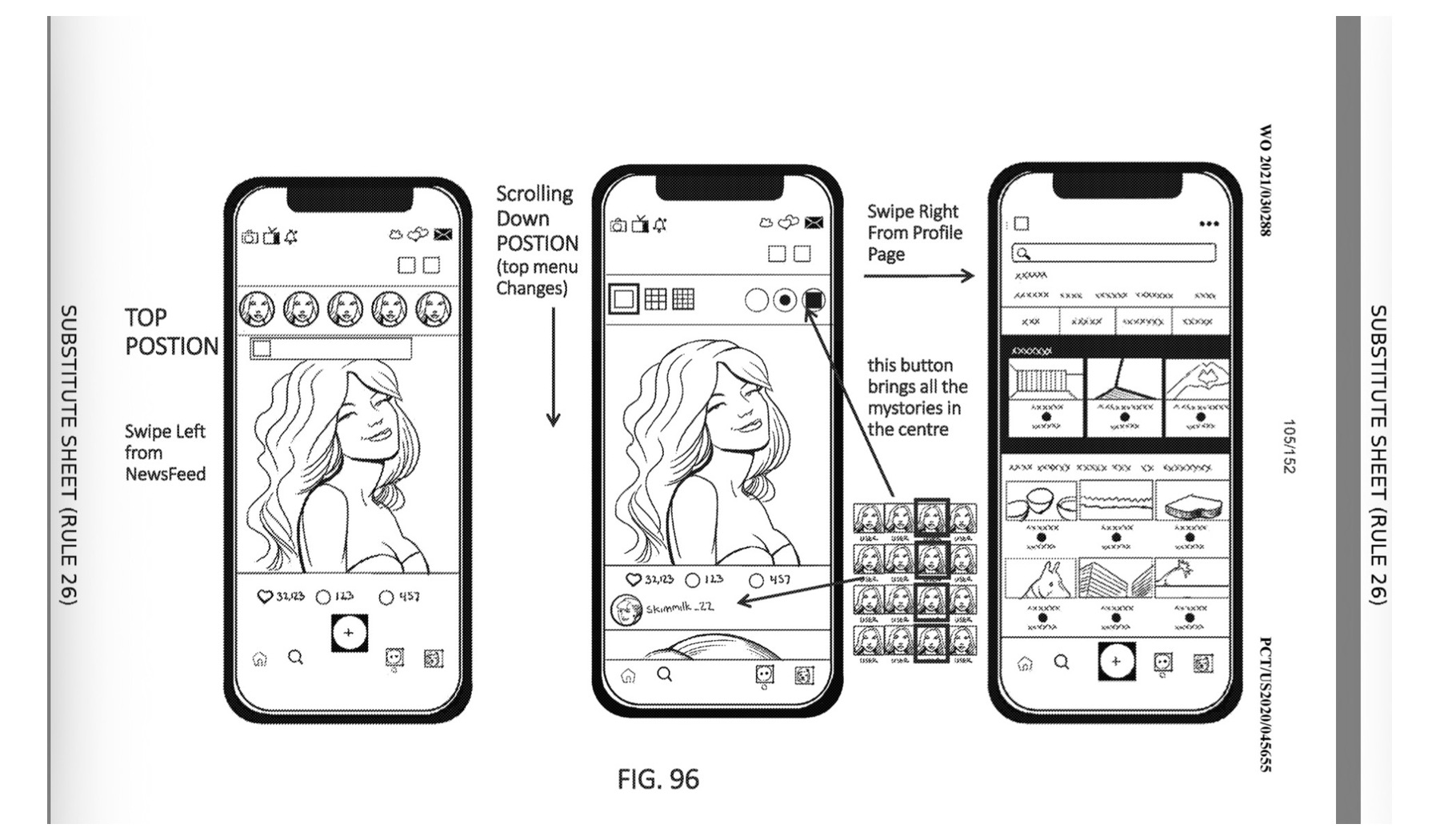
A profile that can receive
Every account is a public identity a donor can find and fund directly: the story of a person, a village or a project, with the receiving wallet attached to it.
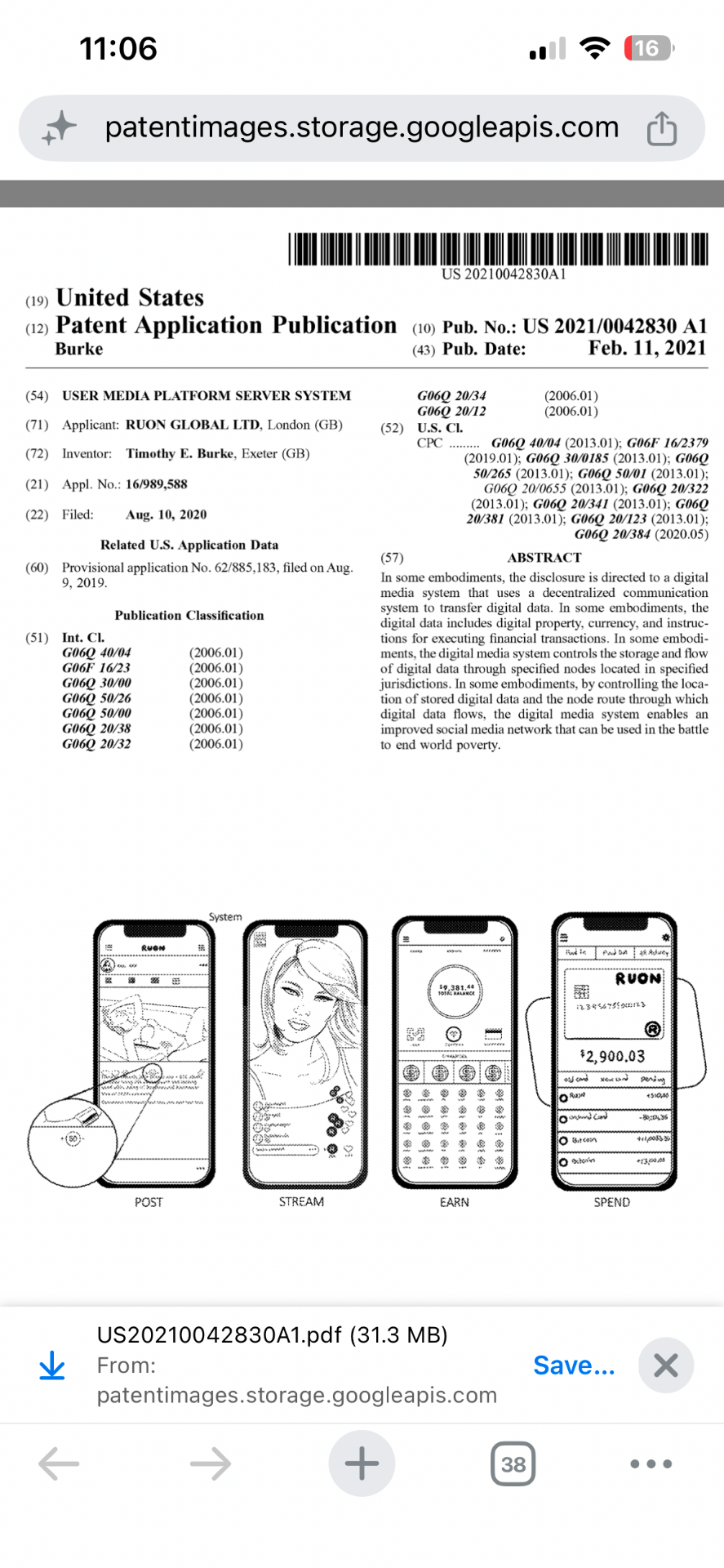
Filed as a poverty-ending system
The published abstract states the purpose plainly: controlling where data and value are stored and routed to enable a social network usable "in the battle to end world poverty."
One app. A bank, an ID and an aid corridor.
Issued from a satellite pass, spendable with no signal, provable afterwards.