
Economics
The business under the mission.
Reaching people no bank can reach is the purpose. This page sets out how the network pays for itself: where revenue comes from, what the rails assume, how cost per account falls as the constellation scales, and the sequence that leads to a planned public listing.
Revenue model
Six lines, all riding the same infrastructure.
Each satellite pass carries value, proof and data at once. That is the leverage: one fixed asset base, several independent revenue surfaces.

Aid settlement fee
Basis points on aid value routed to a verified wallet
Charged to the issuing donor or agency, not the recipient. Designed to sit far below the 8–12% typically lost to intermediaries.
Remittance spread
Per-corridor spread on stablecoin-settled transfers
Global average remittance cost is still above 6%. A satellite-settled corridor competes at a fraction of that and keeps the difference as margin.
Card interchange
Interchange on SpaceFile smart-card spend
Every balance that becomes food, medicine or school fees passes through a card rail that pays the issuer.
Orbital notarisation
Metered price per anchored SuperFile record
Sold as a SuperFile tier: sign a document, an aid receipt or an identity claim to a ledger no government can quietly rewrite.
Connectivity and compute
Subscription per Solar Connectivity Box and per inference job
The ground unit is a recurring line; on-orbit inference is sold to agencies needing analysis where no backhaul exists.
Data and parametric products
Licensed risk signals and index-triggered payouts
Earth-observation signals already collected for aid targeting are the same signals insurers pay for.

Token and rail assumptions
Stable where people hold it, metered where the network runs.
The unbanked cannot be asked to absorb volatility. Value is held in a fiat-referenced asset; the coin exists to meter the network's own scarce resources.
Settlement asset
A fiat-referenced stablecoin for value, with SovereignCoin used for network fees and staking — recipients never hold volatility.
Fee capture
Fees are taken on the donor and merchant side; a recipient's balance is intended to arrive whole.
Token utility
Coin demand is metered to real usage — anchoring, bandwidth and settlement — rather than speculative issuance.
Unit of scale
One connectivity box serving a village community is the smallest revenue-bearing unit; the model scales by boxes, not by branches.
Regulatory frame
Stablecoin issuance and payment permissions obtained market by market under emerging regimes such as the US GENIUS Act and EU MiCA.
Custody
Chain-agnostic wallets on BIP47 and Open Transactions, so no single asset or chain is a single point of failure.
The curve
Launch costs fall. Settlement volume compounds.
Reusable lift and rideshare manifests turn an orbital ledger from a moonshot into an infrastructure business.

Cost curves
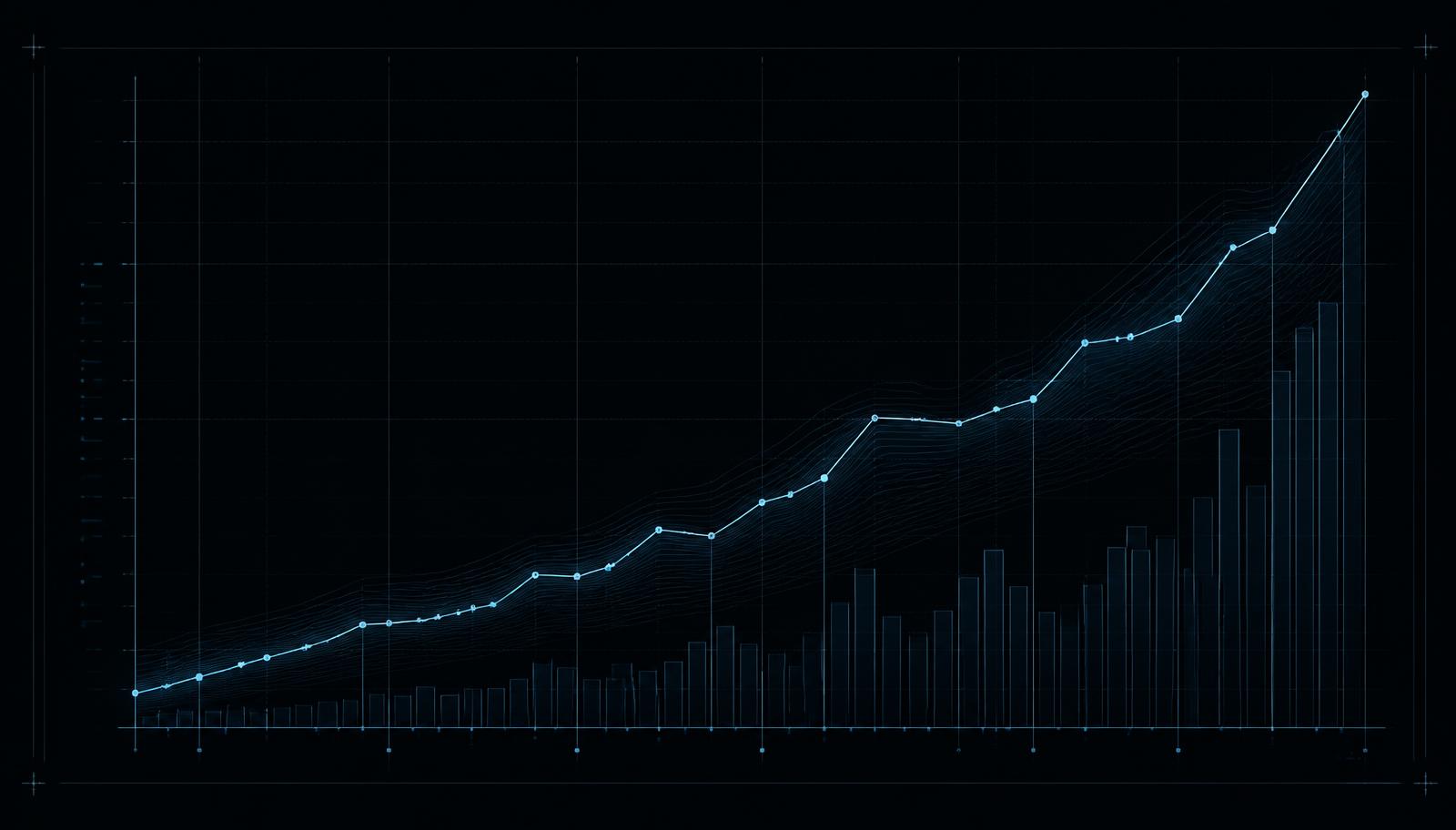
Two curves decide whether this works.
The cost of putting a node in orbit, and the cost of serving one more account once it is there. Both fall — the first because of the launch market, the second because satellites do not care how many wallets they serve.
Indexed cost to orbit a node
2018 · Legacy launch economics
100
Historic cost to place a kilogram in low Earth orbit, indexed to 100.
2022 · Rideshare era
42
Dedicated smallsat rideshare slots collapse the entry cost of an orbital node.
2026 · Heavy-lift rideshare
18
Larger vehicles and standardised buses cut cost per node again.
2029 · Full reuse at cadence
8
Projected: reuse plus fleet volume makes an orbital node cheaper than a regional data centre.
Cost to serve one account
Pilot
High
Fixed constellation and licensing cost spread across a few thousand pilot accounts.
Corridor rollout
−70%
The same satellites serve every account added under an existing footprint.
Regional scale
−90%
Marginal cost of an account approaches the cost of the card and the KYC check.
Network scale
−97%
Infrastructure is fully amortised; incremental accounts are almost pure contribution.
Curves are illustrative and directional. They describe the shape of the economics, not a forecast, and are not financial projections.

Funding this shape
Infrastructure funded before it earns, by design.
Satellites, ground units and regulated rails are capital-intensive and long-dated. A public listing is the funding route matched to that profile, released in step with the build sequence — see the phase-by-phase plan and the capital tranches that unlock each one.


Important: this page is provided for information only. Figures are illustrative assumptions used to describe a business model, not results, forecasts or guarantees. It is not a prospectus, an offer to sell, or a solicitation of an offer to buy any security or token in any jurisdiction.
Infrastructure economics, priced per signed transaction.
Forward-looking information only. Nothing here is an offer of securities or tokens.
Investor FAQ
Revenue questions, answered.
Which revenue line comes first?
Notarisation and sovereign cloud. They are contracted, institutional and terrestrial, so they generate cash while the orbital tier is still a handful of hosted nodes.
Are the aid fees realistic against existing programmes?
Yes — they are set below the administrative overhead agencies already absorb on cash transfer programmes, and they replace manual reconciliation with an automatic proof trail.
How capital-intensive is the orbital tier?
In early phases, barely. A software-only node on a partner satellite is in the low hundreds of thousands, and a hosted payload module is a fixed-price mission — roughly a tenth of a dedicated spacecraft programme.
What drives gross margin as volume grows?
Bought connectivity and leased pass time are the main variable costs, and both fall per unit as constellation supply expands. Notarisation and identity are software margins from day one.